Solutions / Web and API
Web application and API penetration testing, from the outside in
From one domain, ORION maps the subdomains, hosts, services and APIs reachable from the internet, VEGA tests input handling, sessions and headers, and NOVA proves what is exploitable with benign proof.
- You provide
- A domain
- Intensity
- Reconnaissance, Standard, Deep
- Scored against
- OWASP Top 10, NIST CSF 2.0, NIST SP 800-53, NIST SP 800-171, COBIT
- Plans
- On every plan: Standard is priced per domain, Premium includes 5 domains and Enterprise 20. Compare the plans
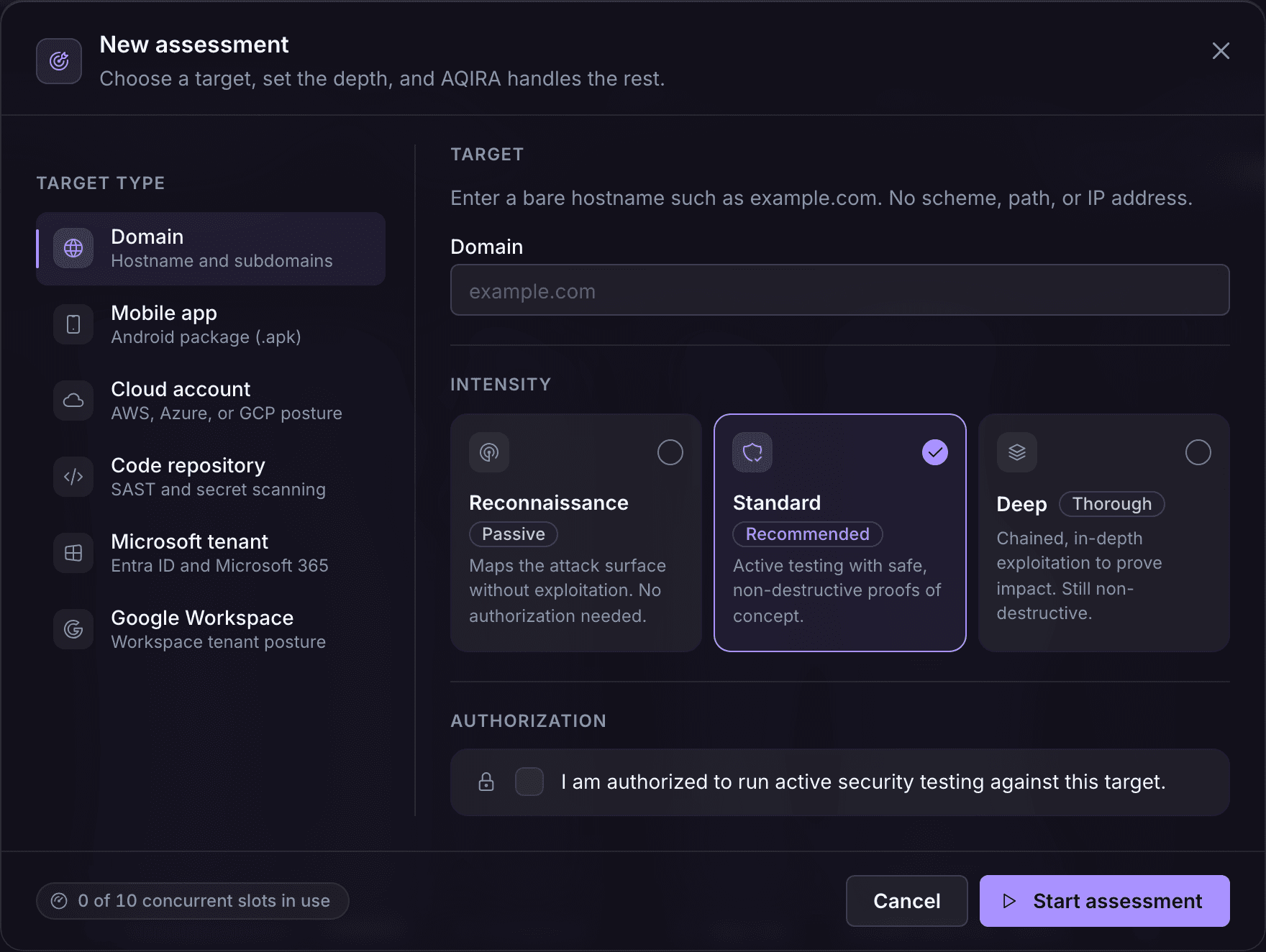
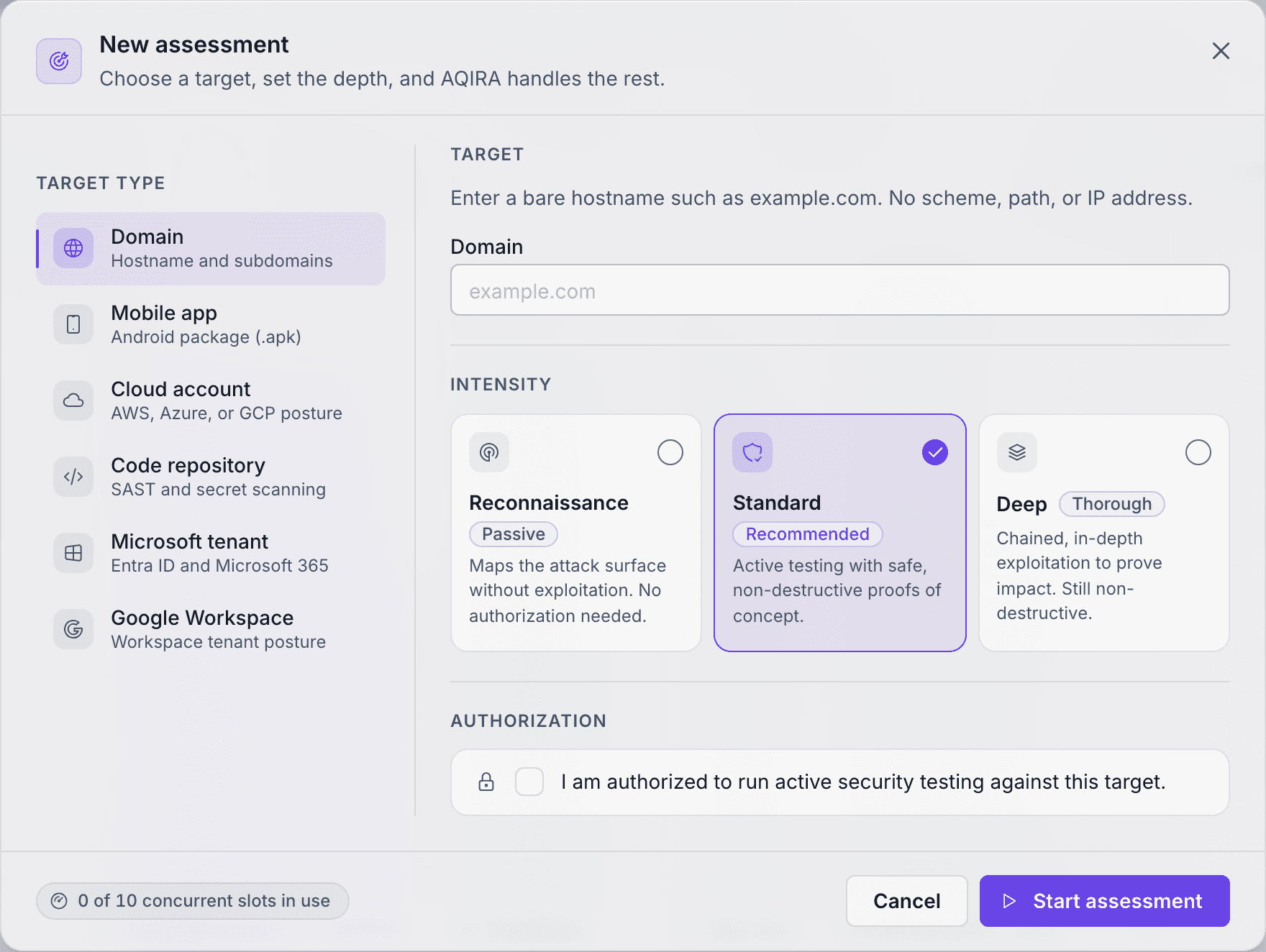
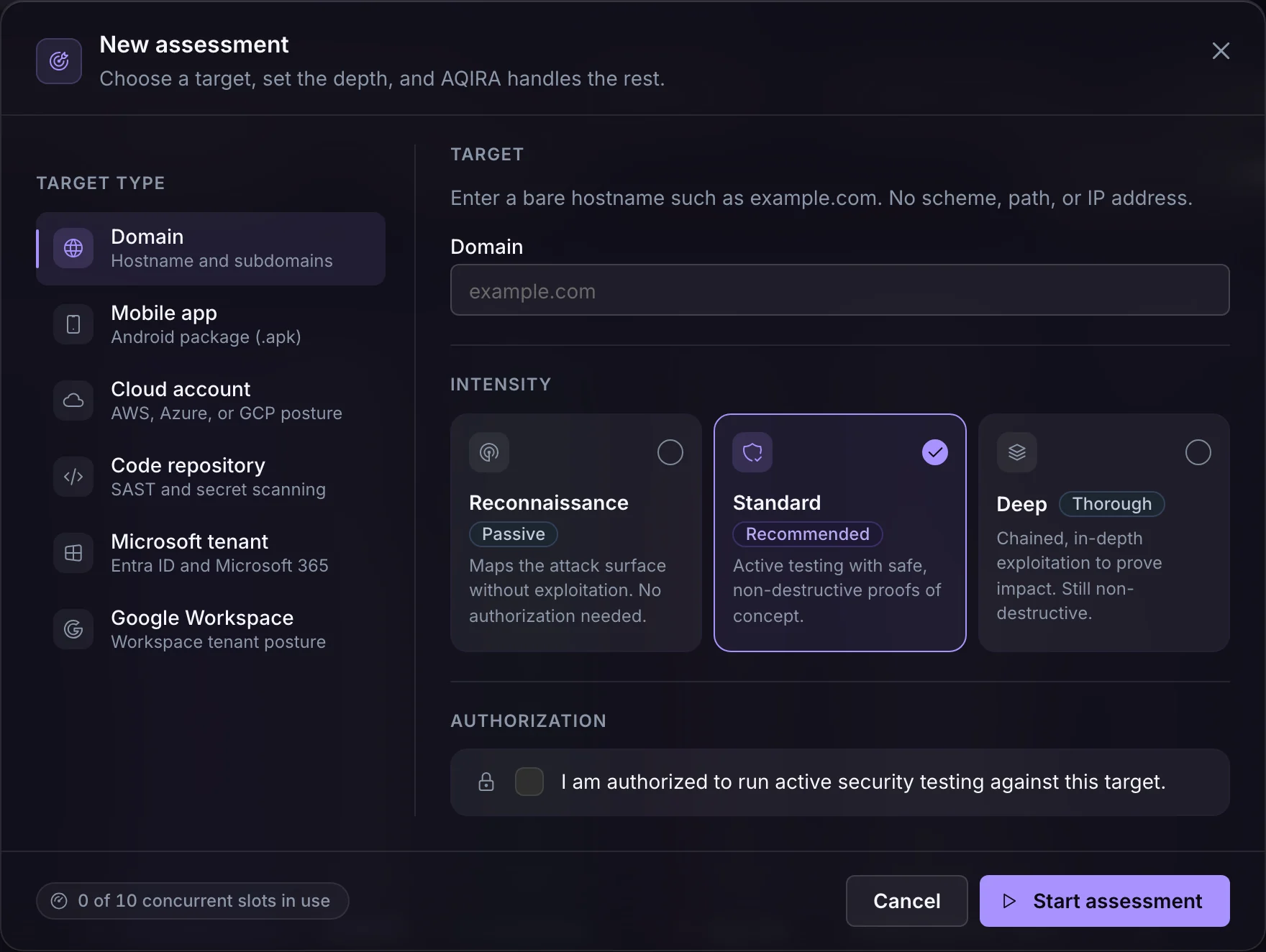
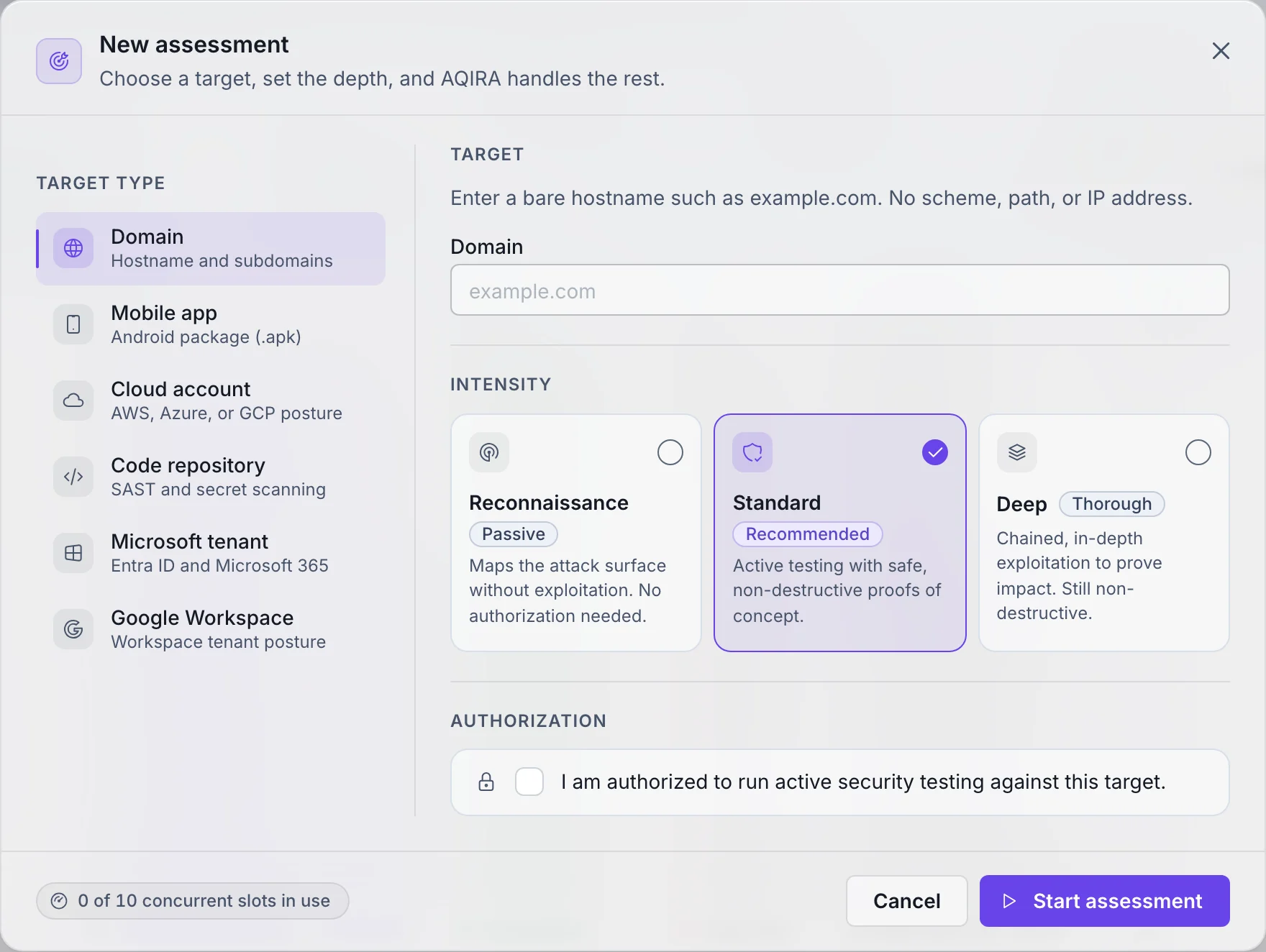
What you hand AQIRA
On a domain, the New assessment step asks for the following.
- You provide
- A domain. The agents work outward to the subdomains, hosts, services and APIs an attacker could reach.
- Access
- Nothing to grant. The operator confirms authorisation for the target before anything active runs.
- Authorisation
- Standard and Deep start only once the operator confirms:
I am authorized to run active security testing against this target.
- Intensity
- Reconnaissance. Maps the attack surface without exploitation. No authorisation needed.
- Standard. Active testing with safe, non-destructive proofs of concept.
- Deep. Chained, in-depth exploitation to prove impact. Still non-destructive.
What each input's access allows, and how AQIRA keeps it to the least it needs, is on the security page.
ORION, VEGA, ATLAS, NOVA, POLARIS, SCRIBE
What each agent does on this input
The same six agents, in the same order; on a domain this is the work.
01ORIONReconnaissance
Maps the public attack surface.
- Open-source intel
- DNS intelligence
- Vulnerability correlation
- Source-code review
02VEGAWeb and API Security
Probes web and API input handling, sessions and headers.
- Source-code review
- Dependency risk
- Integration scanning
03ATLASInfrastructure and Configuration
Assesses cloud, transport and the internal segment.
- Cloud posture
- DNS intelligence
- Dependency risk
- Vulnerability correlation
04NOVAExploitability Validation
Validates exploitability to benign proof.
- Offensive toolchain
- Vulnerability correlation
- Browser attack paths
- Breach exposure
- Hidden-data inspection
- Remote-asset exposure
05POLARISReview and Reporting
Consolidates what the others found. Scores the findings against OWASP Top 10 and the NIST and COBIT controls they touch.
06SCRIBEReport
Writes the client-deliverable report from the same evidence the console shows.
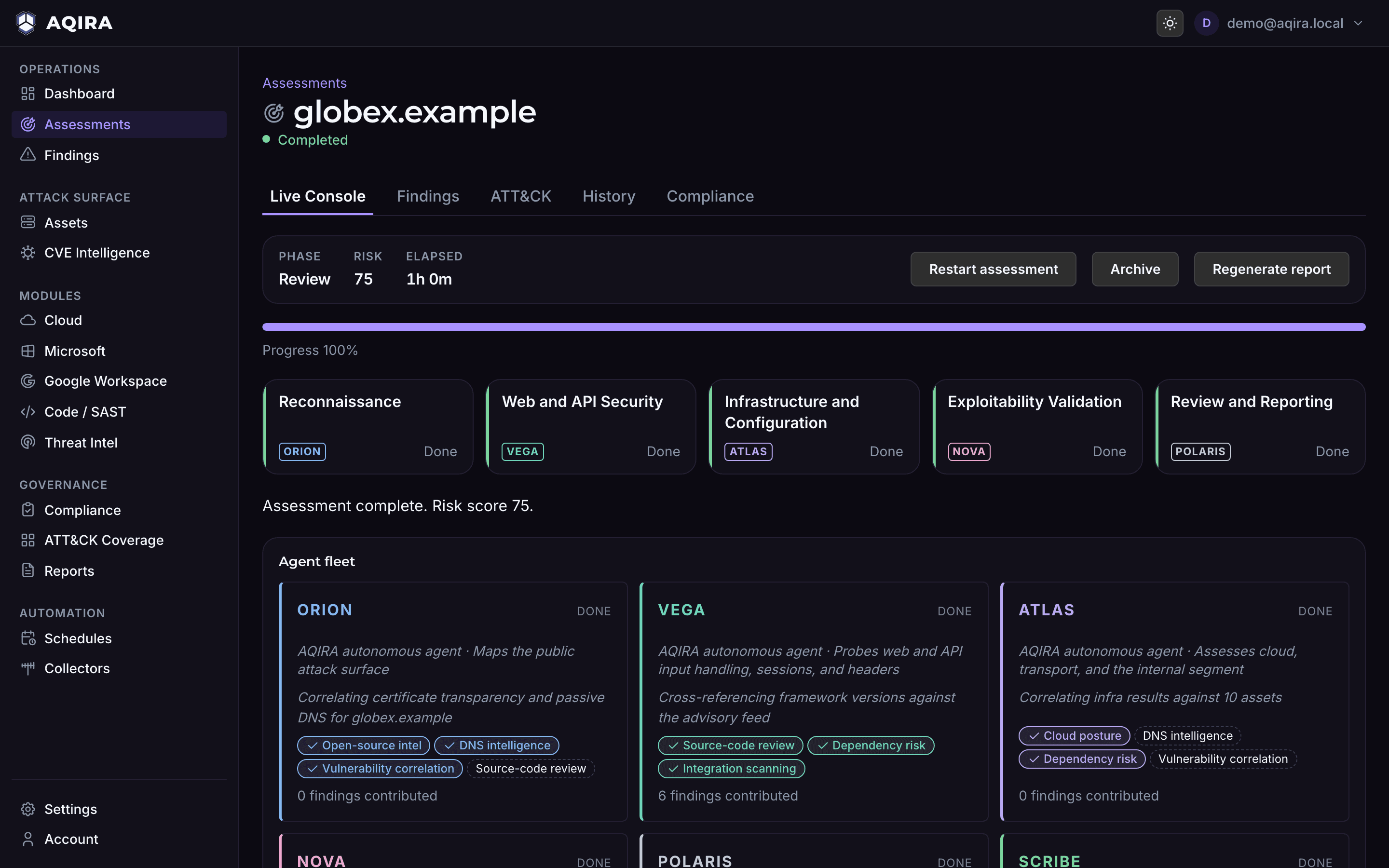
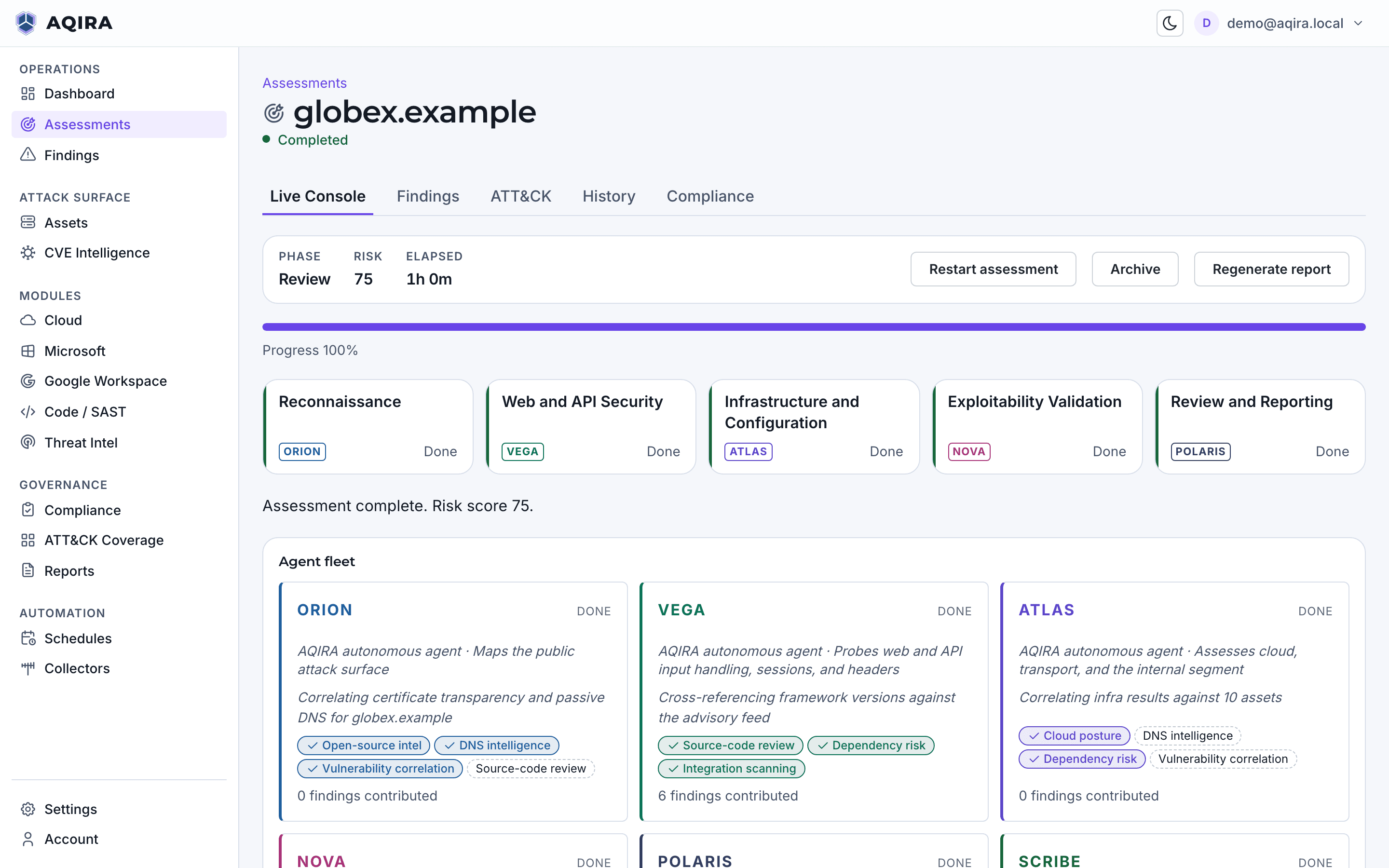
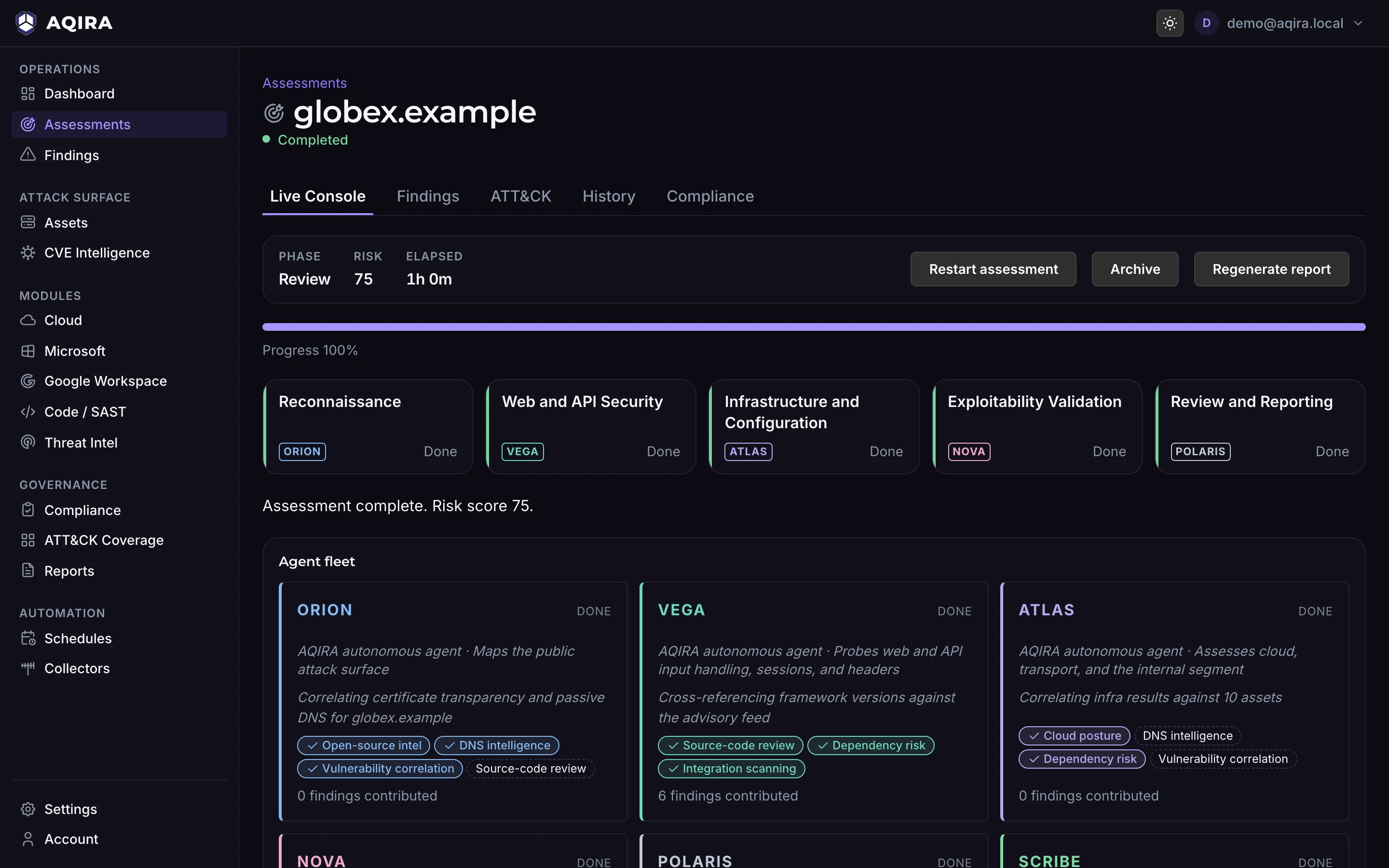
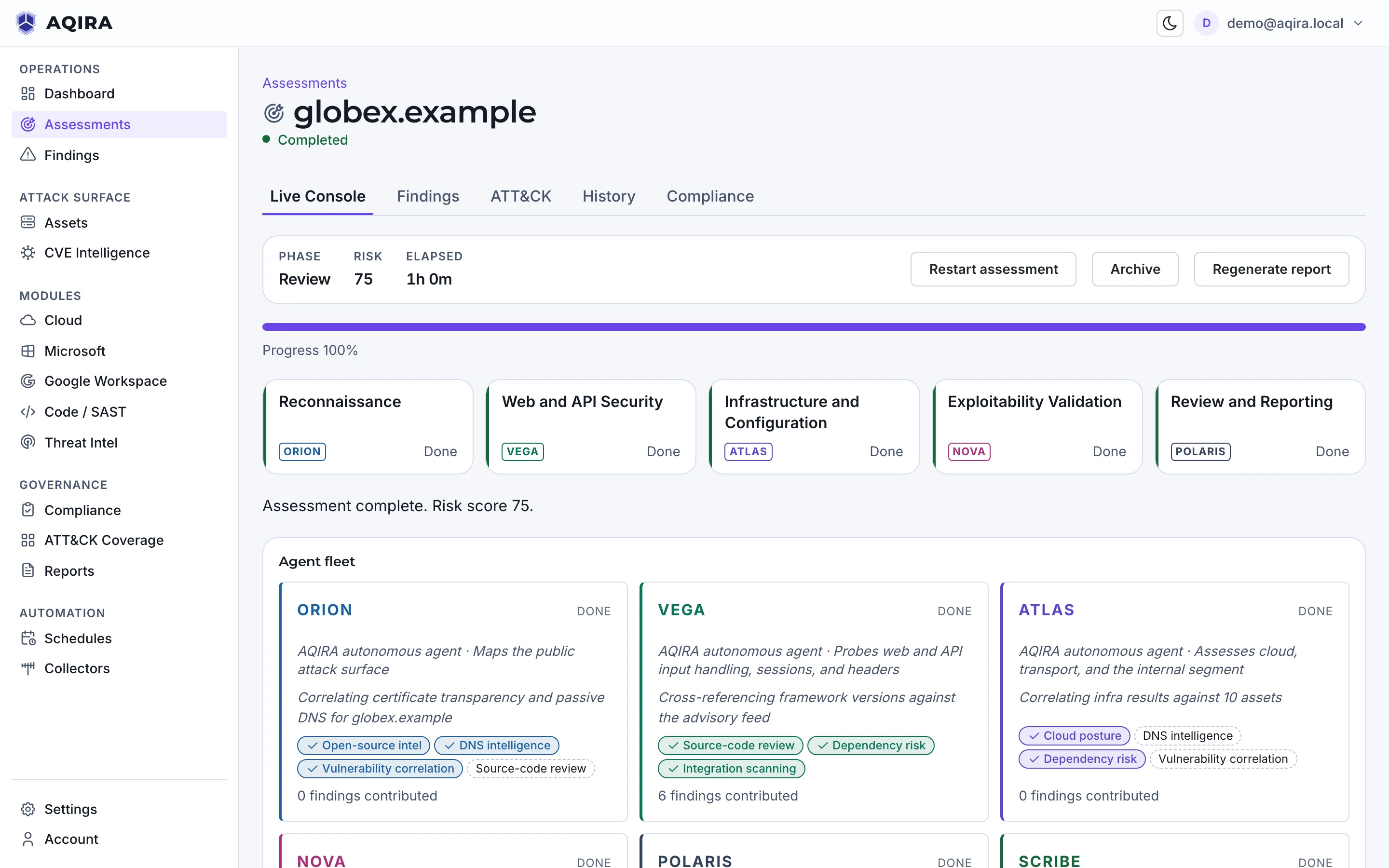
The findings it raises
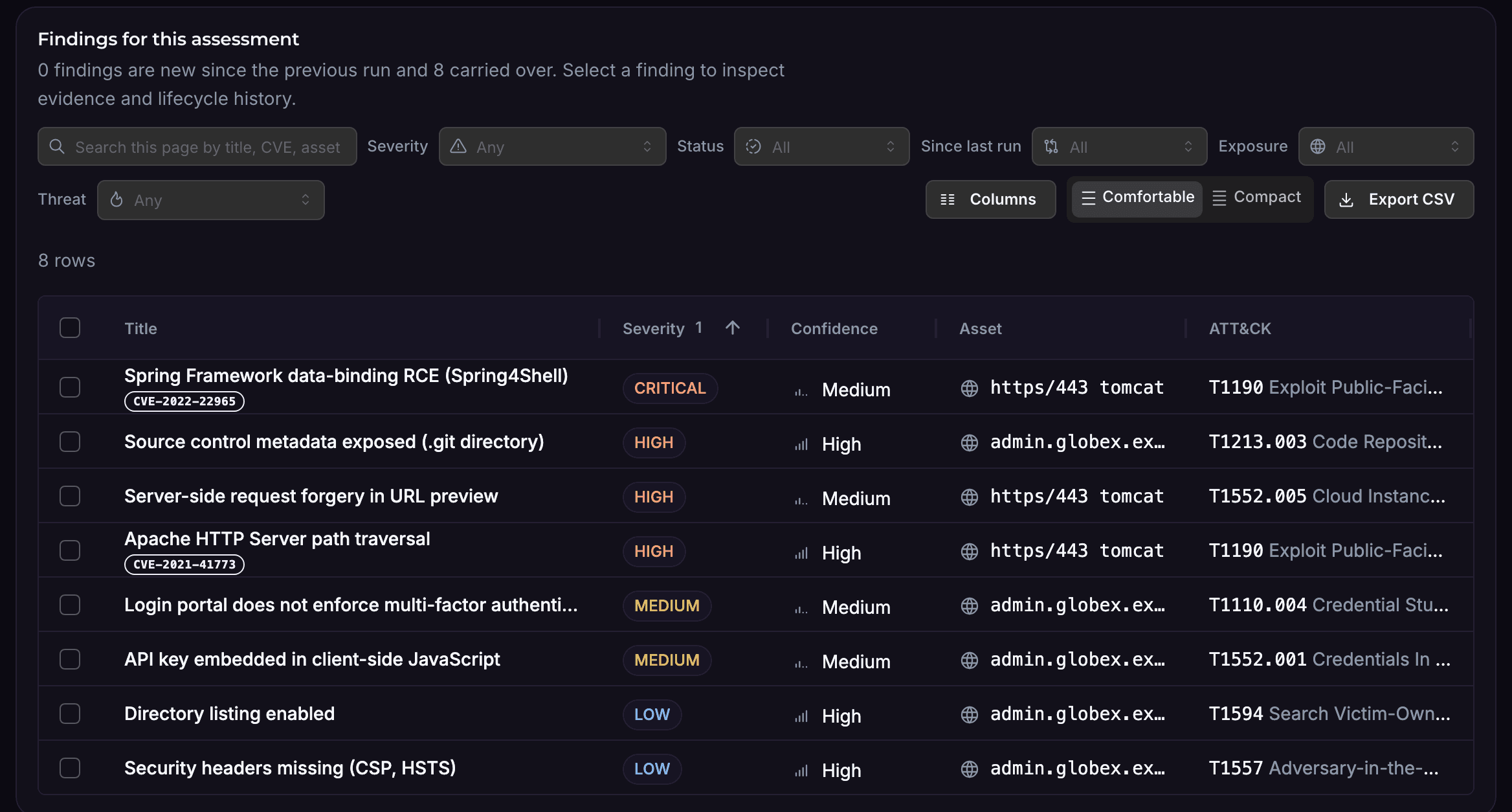
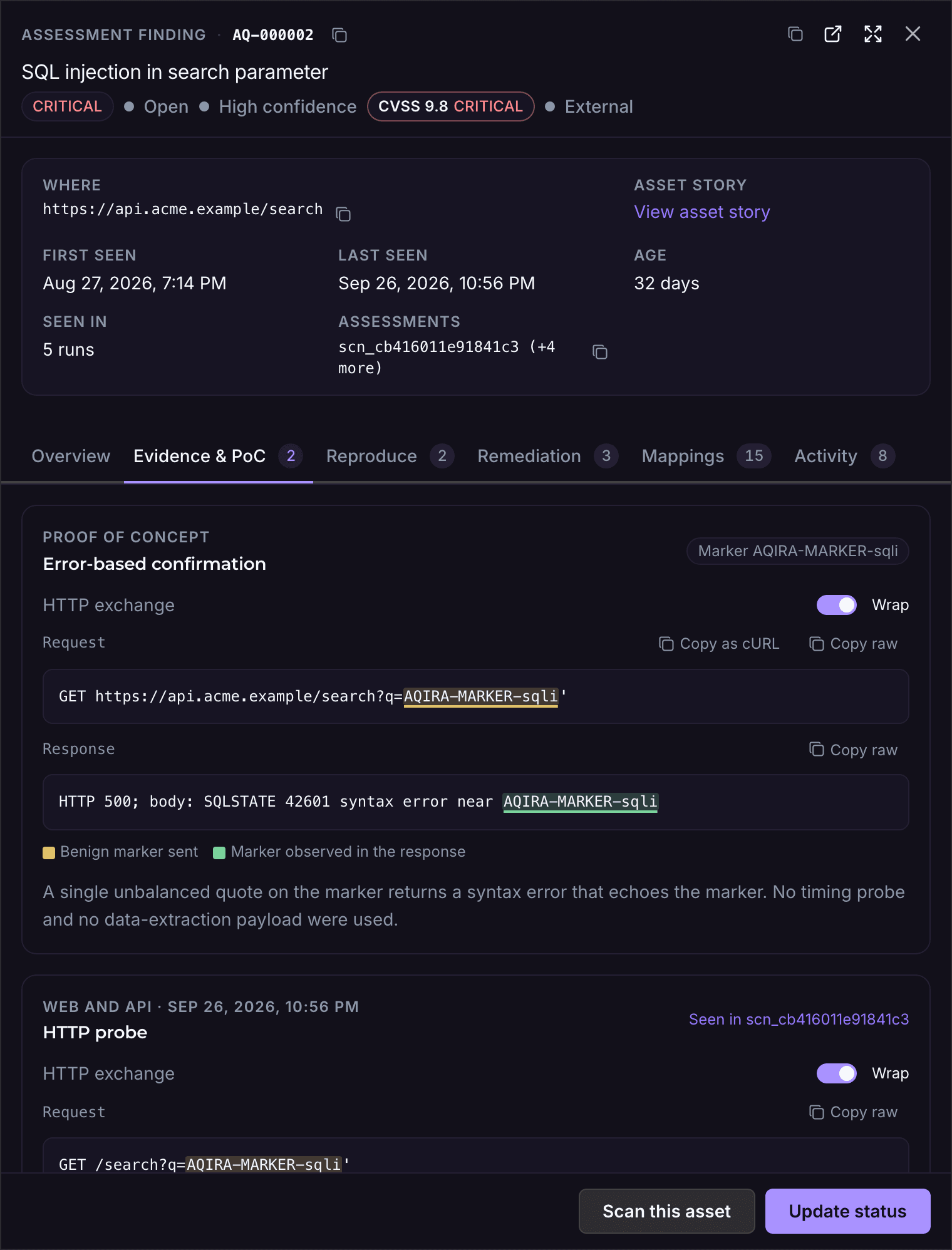
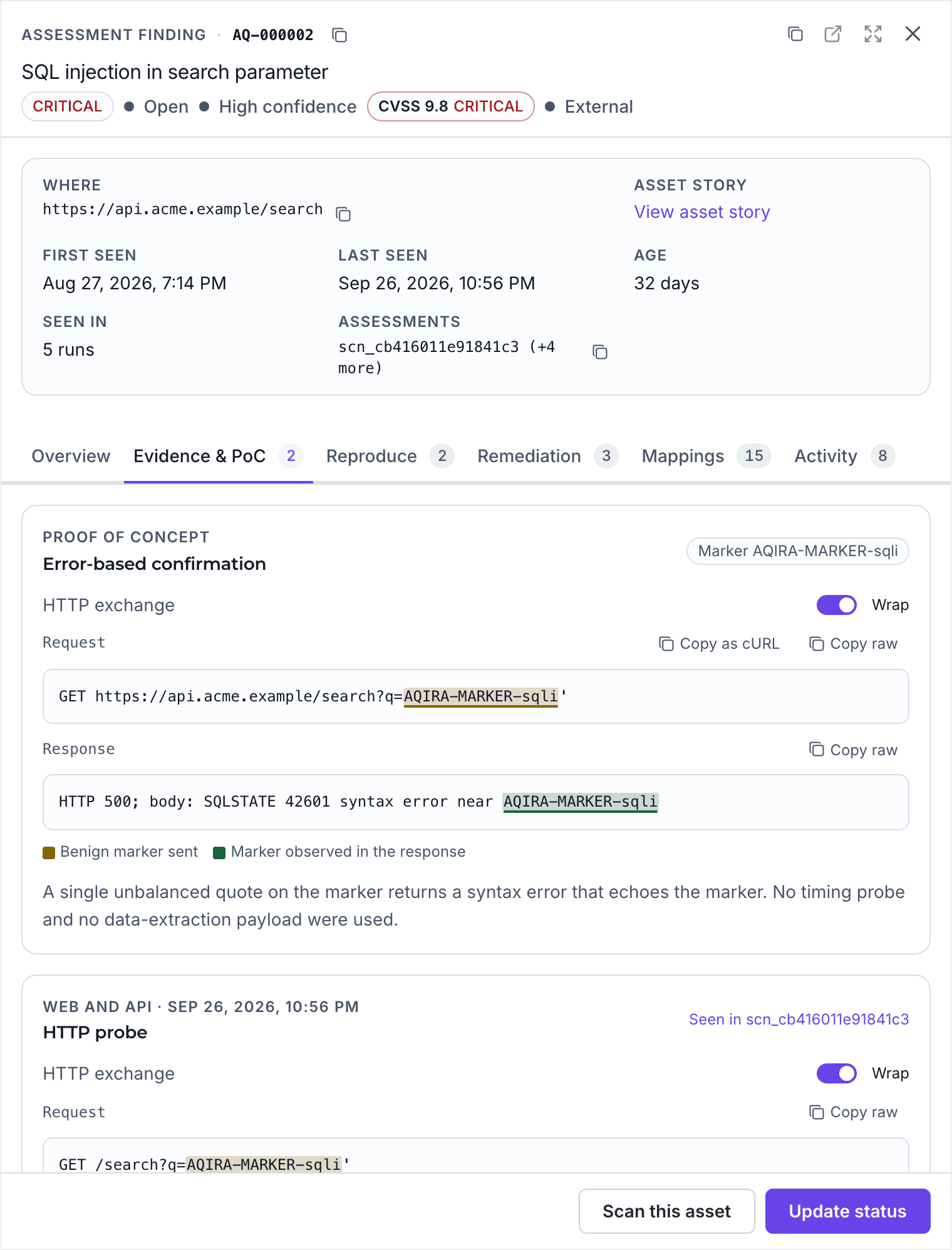
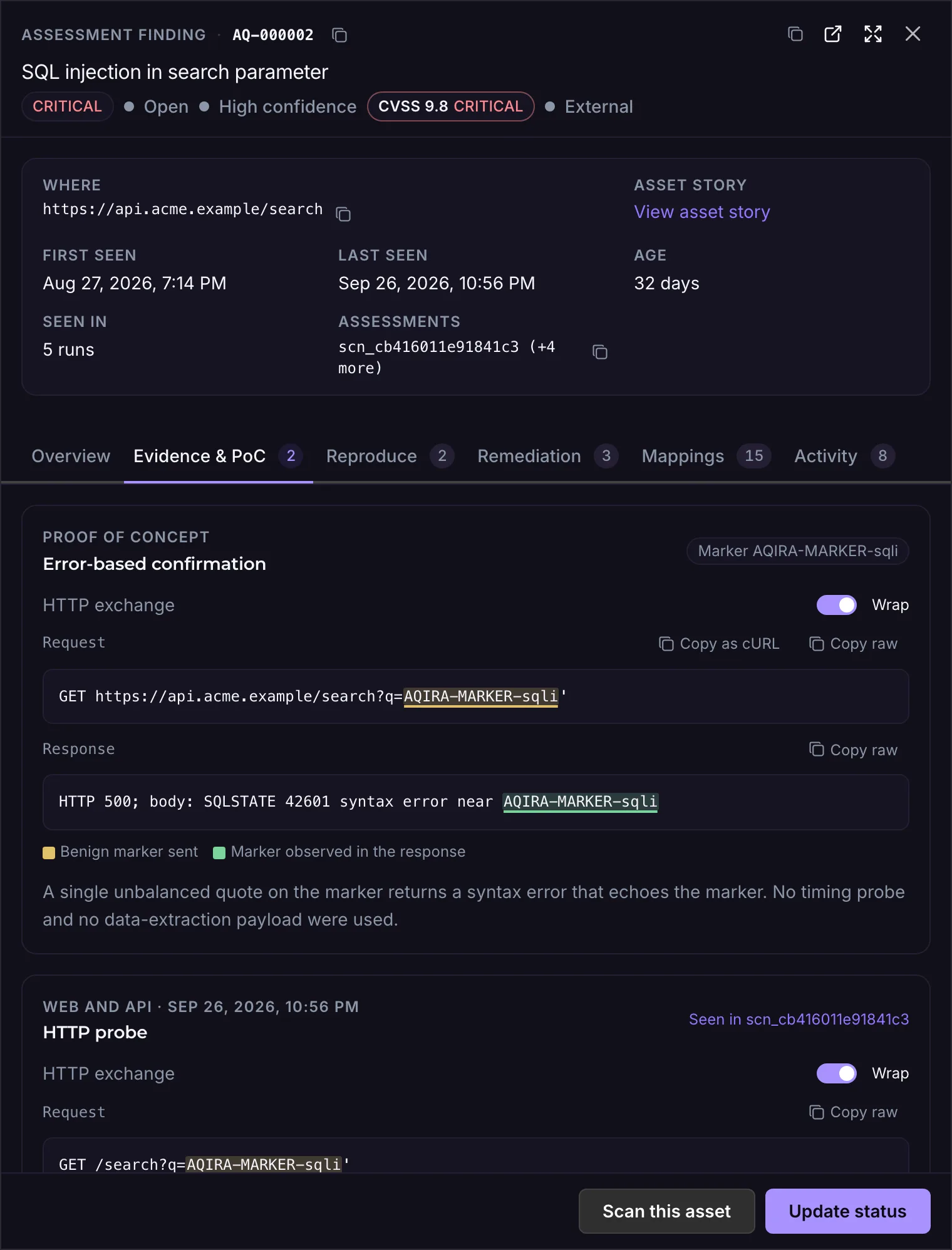
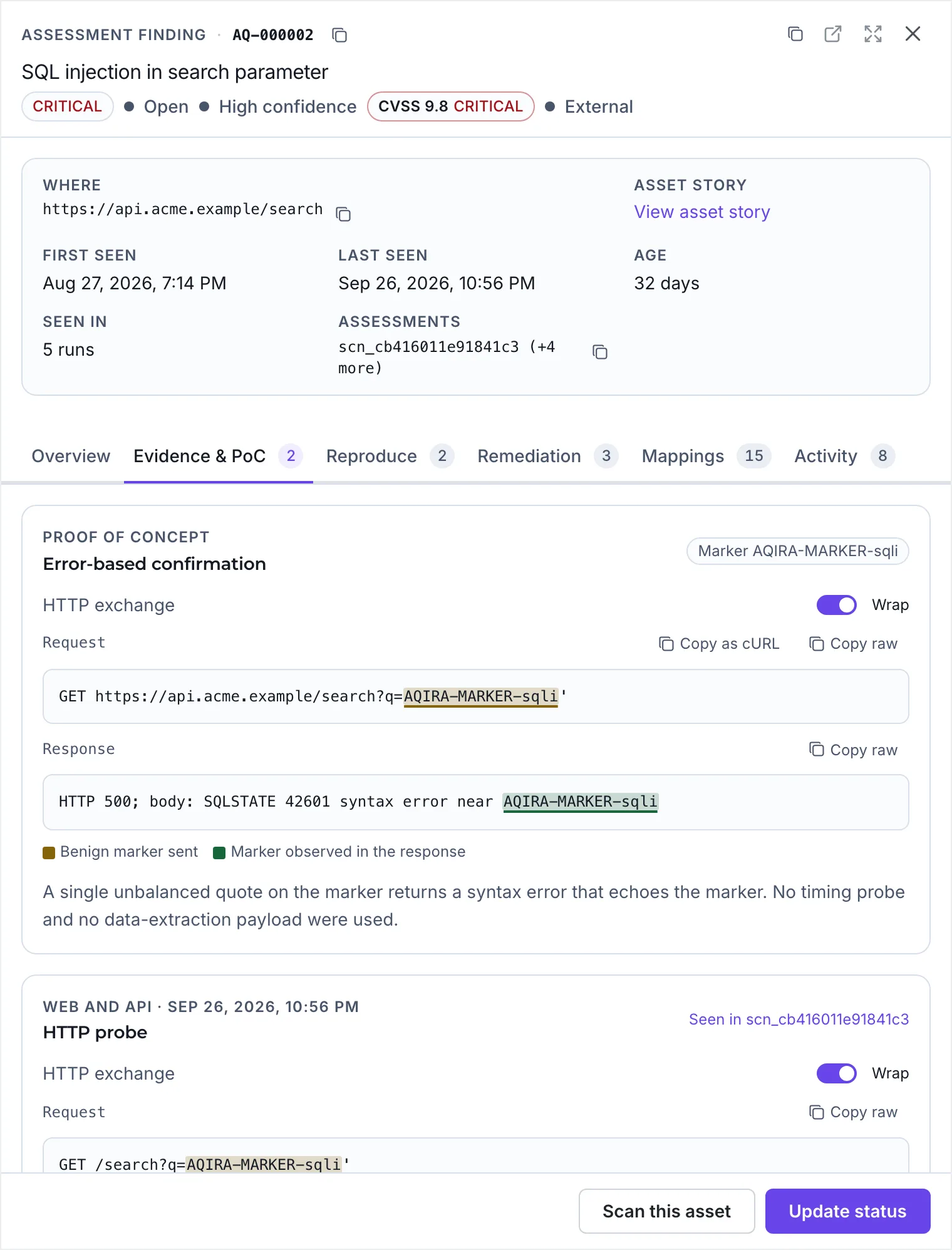
Examples of what AQIRA reports on a domain, each with evidence, steps to reproduce, remediation in priority order and its ATT&CK technique.
- SQL injection in a search parameter
- Server-side request forgery in a URL preview
- Source control metadata exposed (.git directory)
- Administrative interface exposed to the internet
- Dangling DNS record that allows subdomain takeover
- Publicly listable cloud storage bucket
- Outdated TLS protocol versions accepted
- Known framework flaws such as Log4Shell and Spring4Shell, with the version confirmed
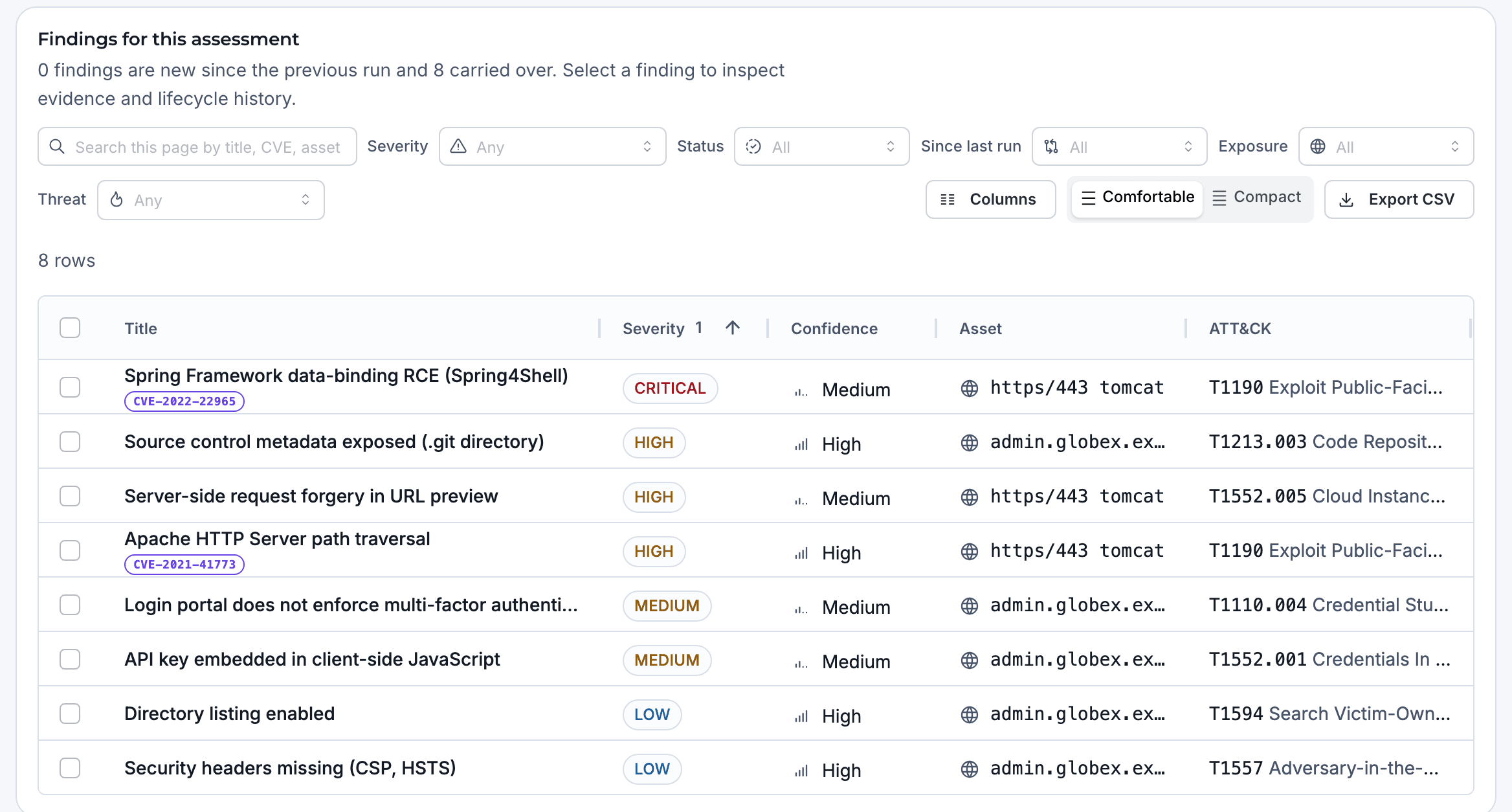
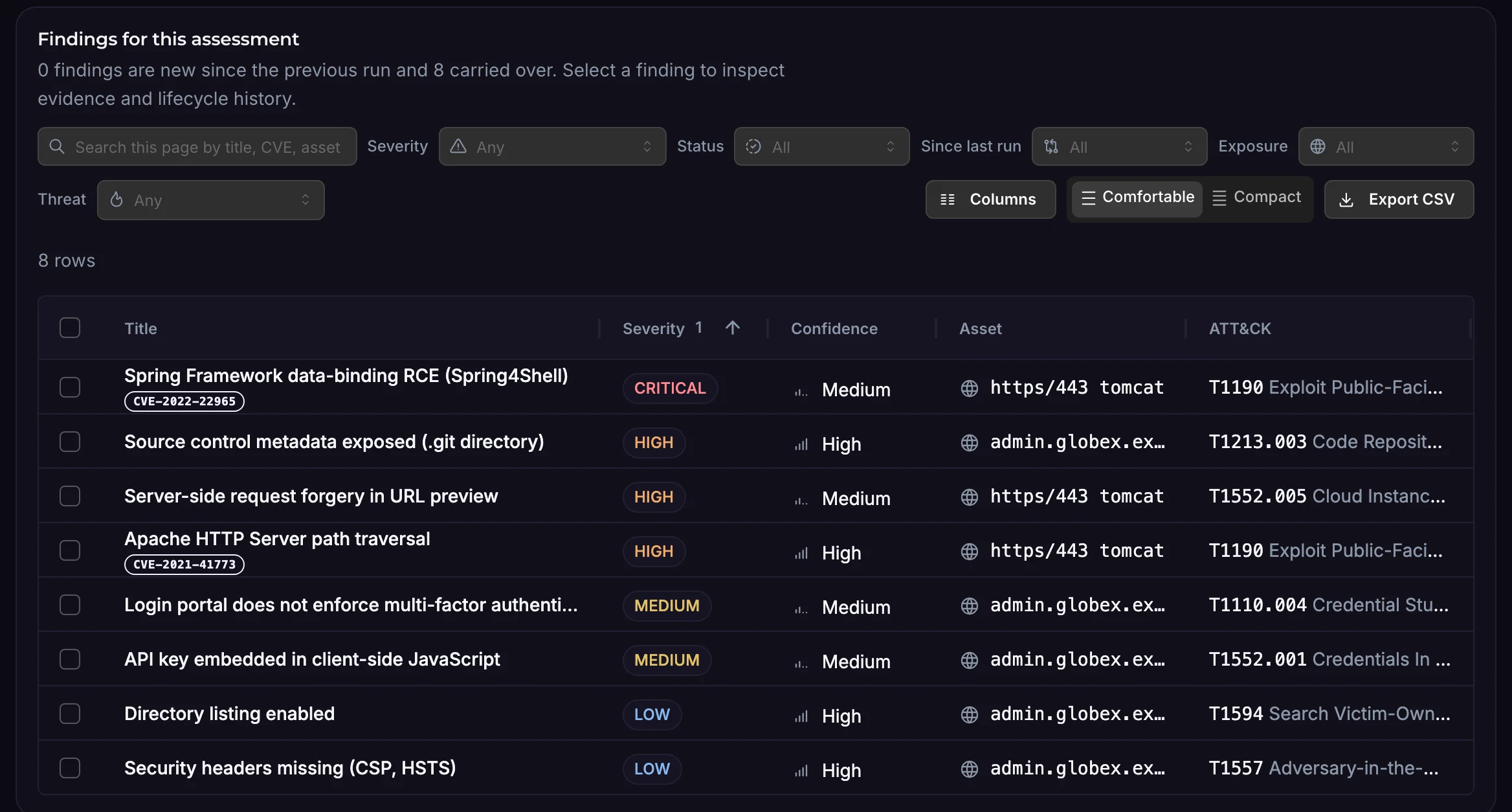
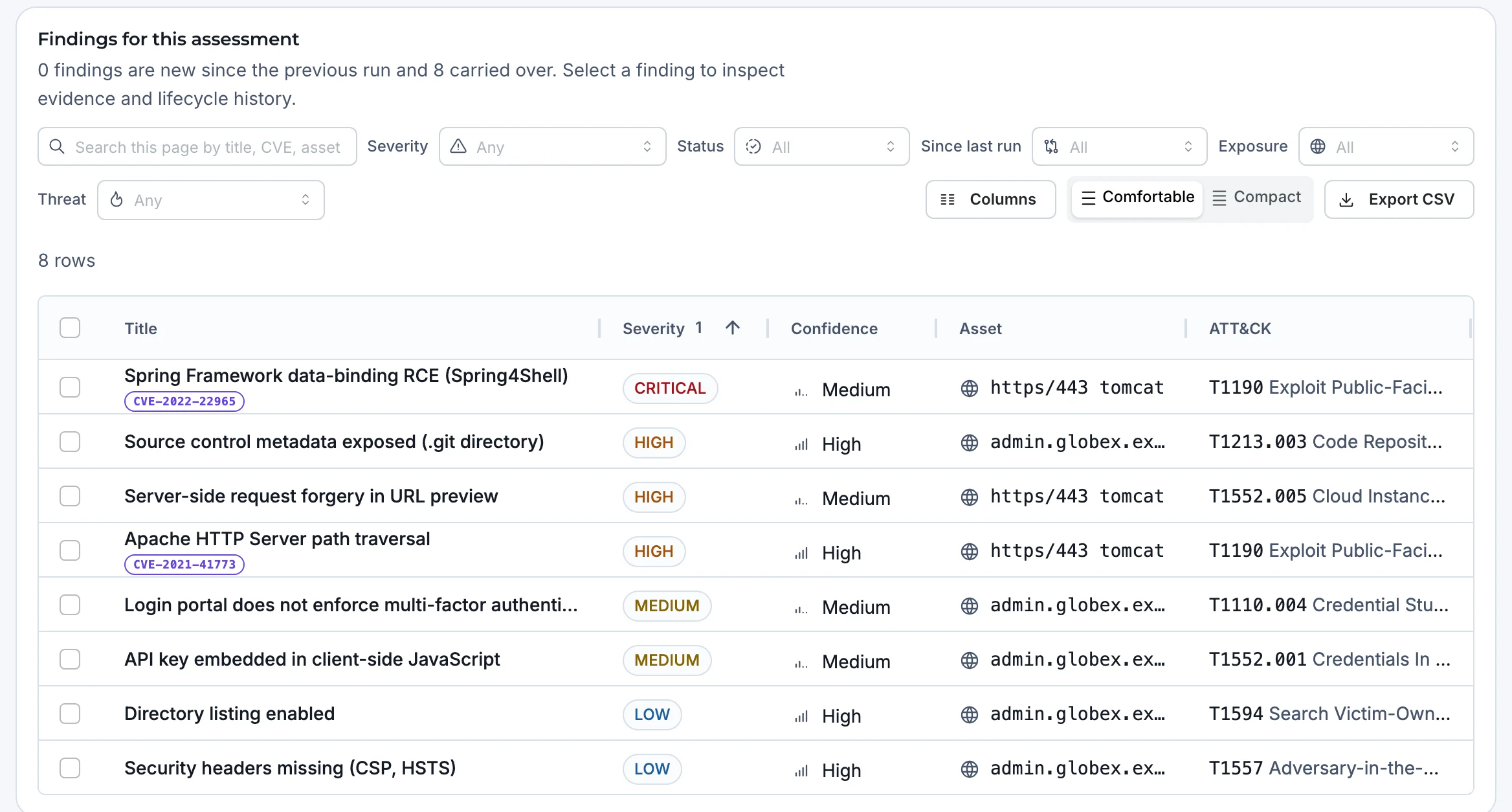
Examples only. What an assessment finds depends on your target; the capture shows a demo assessment.
What it maps, and where results land
Each finding opens on its evidence: the request sent and the response that proves the weakness, with steps to reproduce and remediation in priority order.
- Domains and DNS
- The domain, its DNS records and every subdomain found through certificate transparency and passive DNS.
- Hosts and services
- The hosts behind them, their services, and the web and API endpoints those services expose.
- Cloud resources
- Storage buckets reachable from the domain, filed with the cloud resources.
Mapped to what your auditors read
POLARIS maps every finding to the controls it touches, in every framework that applies.
Scored against
- OWASP Top 10
- NIST CSF 2.0
- NIST SP 800-53
- NIST SP 800-171
- COBIT
Every finding is also mapped to
ATT&CK, OWASP, NIST CSF, NIST SP 800-53, NIST SP 800-171 and COBIT.
Control status, owner and evidence are in compliance mapping; what reaches the client is in the reports.
Where this assessment stops
A clean result covers only what AQIRA tests on a domain.
Reachable from the internet, without signing in
A web and API assessment does not test behind a web login.
Reconnaissance sends no attacks
Reconnaissance maps the attack surface and sends nothing active; Standard and Deep need confirmed authorisation for the target.
Business logic needs a person
Flaws in what an application is for, such as a changeable basket price, need a person who knows the business.
Limits common to every input, and how proof stays benign, are in the methodology.
The other five inputs
Next step
A demo assessment of a domain
A demo runs one assessment in the console, with demo data: the agents at work, the evidence behind each finding, and the report.