Solutions / Code repositories
SAST, secret detection and SCA on every repository
With a read-only token, AQIRA traces tainted input from source to sink, builds the software bill of materials, and reviews dependencies, infrastructure code and CI permissions. Committed secrets are verified, their values never shown.
- You provide
- A Git repository
- Intensity
- Standard, Deep
- Grouped by weakness
- CWE
- Plans
- On Premium, with 3 repositories, and Enterprise, with 20. Compare the plans
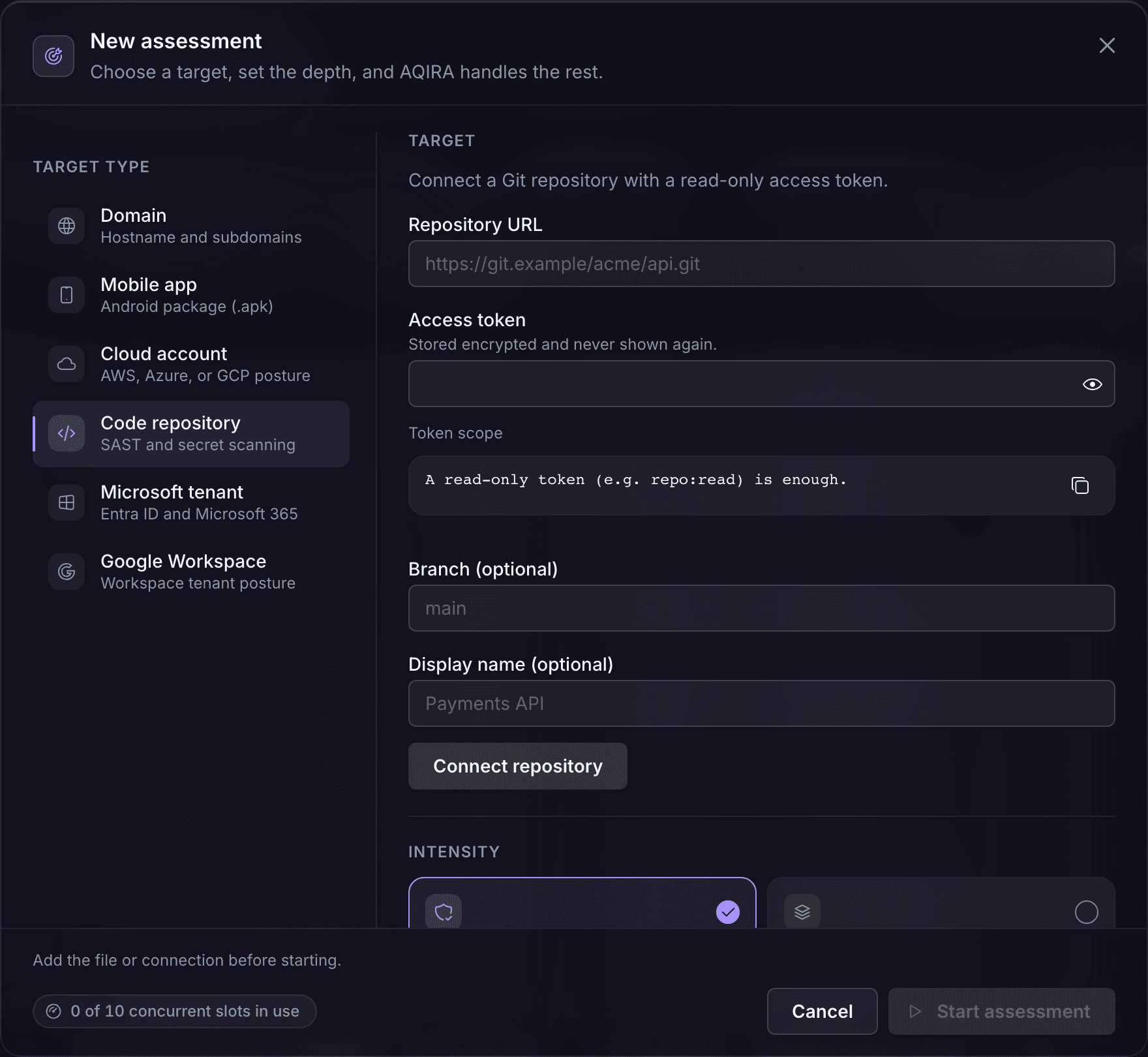
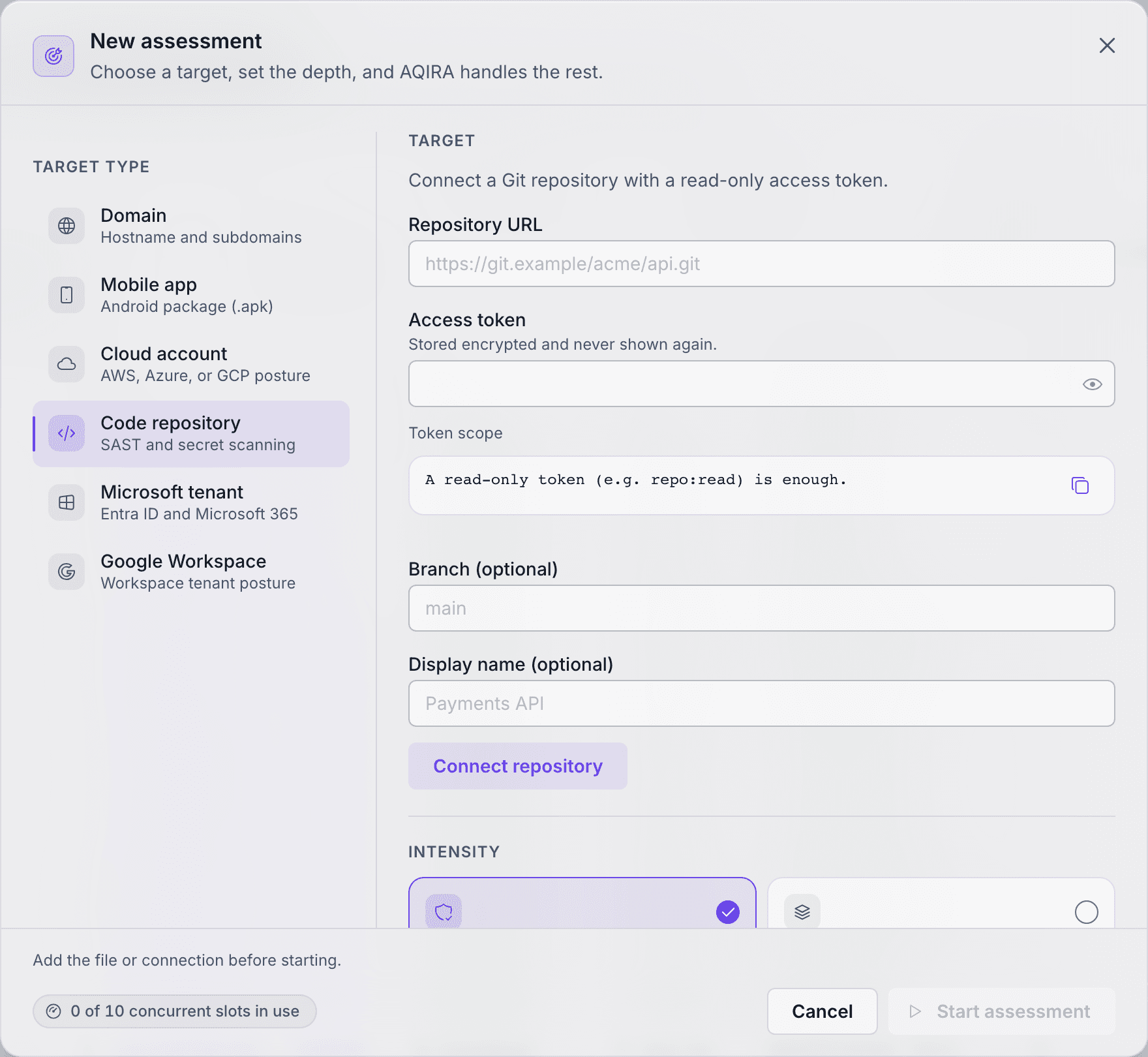
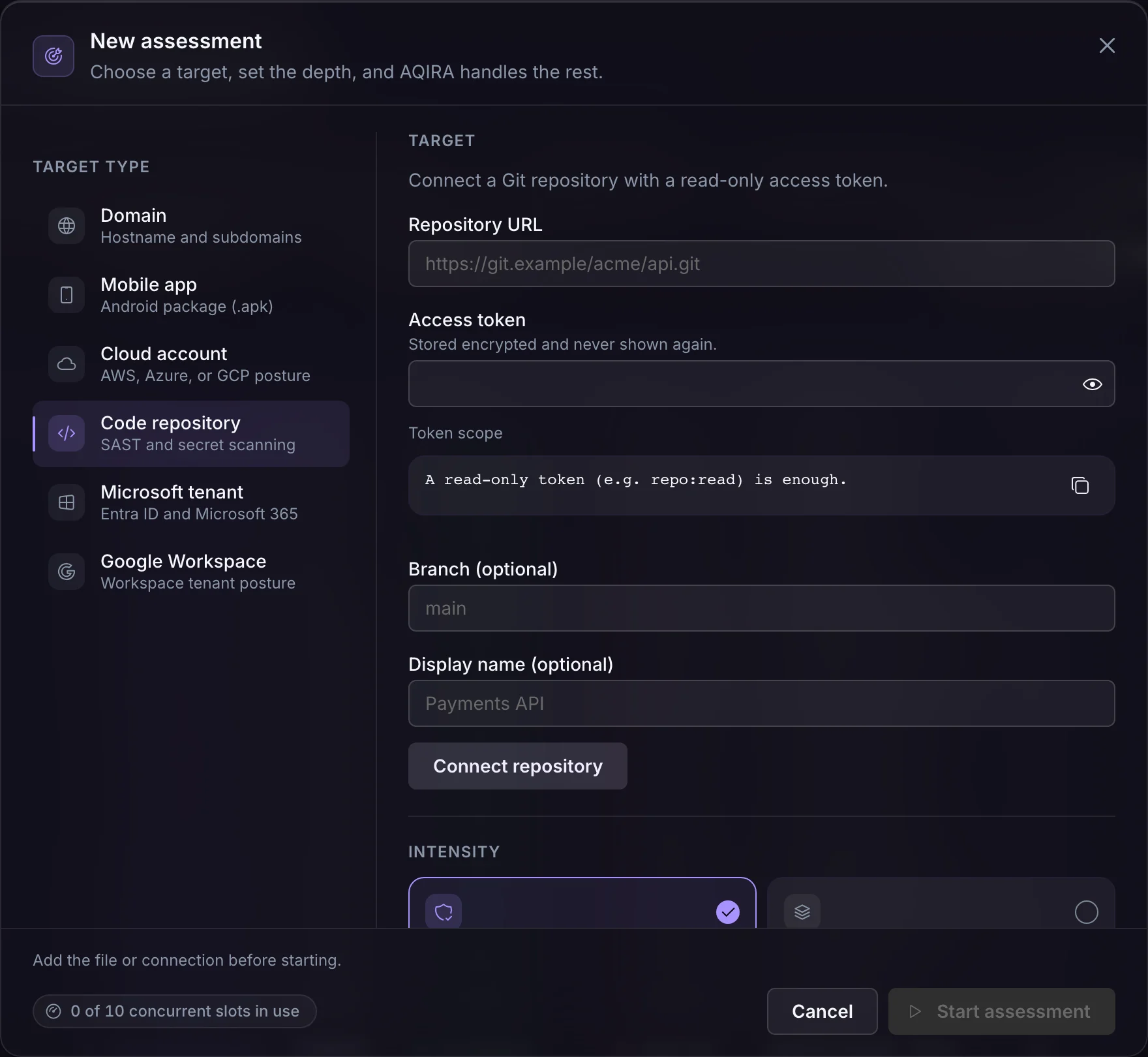
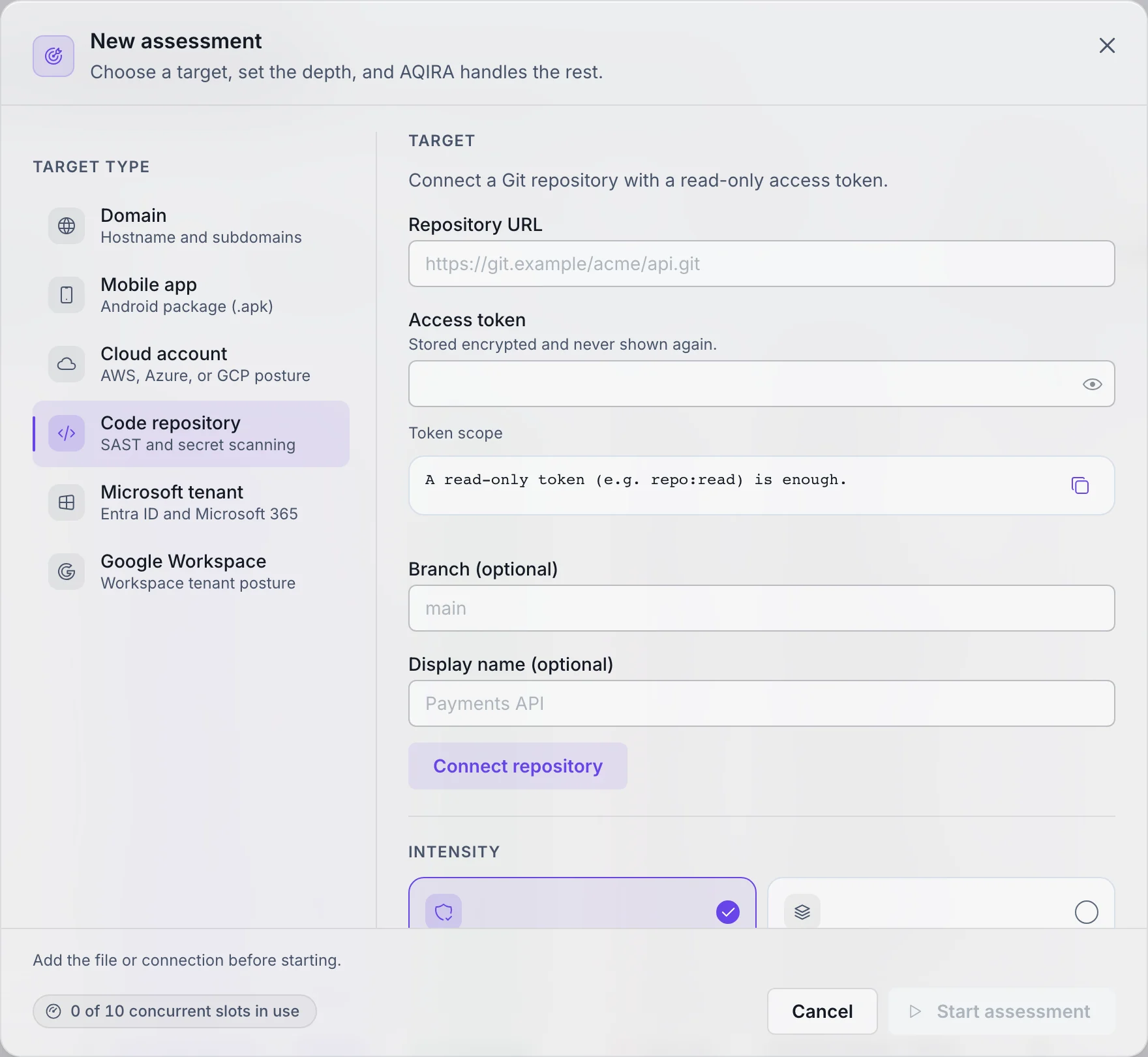
What you hand AQIRA
On a code repository, the New assessment step asks for the following.
- You provide
- A Git repository URL and a read-only access token, with an optional branch.
- Access
- The token is stored encrypted and never shown again. A token scoped to read the repository is enough.
- Authorisation
- The assessment starts only once the operator confirms:
I am authorized to scan this repository.
- Intensity
- Standard. Active testing with safe, non-destructive proofs of concept.
- Deep. Chained, in-depth exploitation to prove impact. Still non-destructive.
What each input's access allows, and how AQIRA keeps it to the least it needs, is on the security page.
ORION, VEGA, ATLAS, NOVA, POLARIS, SCRIBE
What each agent does on this input
The same six agents, in the same order; on a code repository this is the work.
01ORIONClone and language detection
Clones the repository and detects its languages.
- Repository intake
- Language detection
- Open-source intel
02VEGAStatic analysis (SAST)
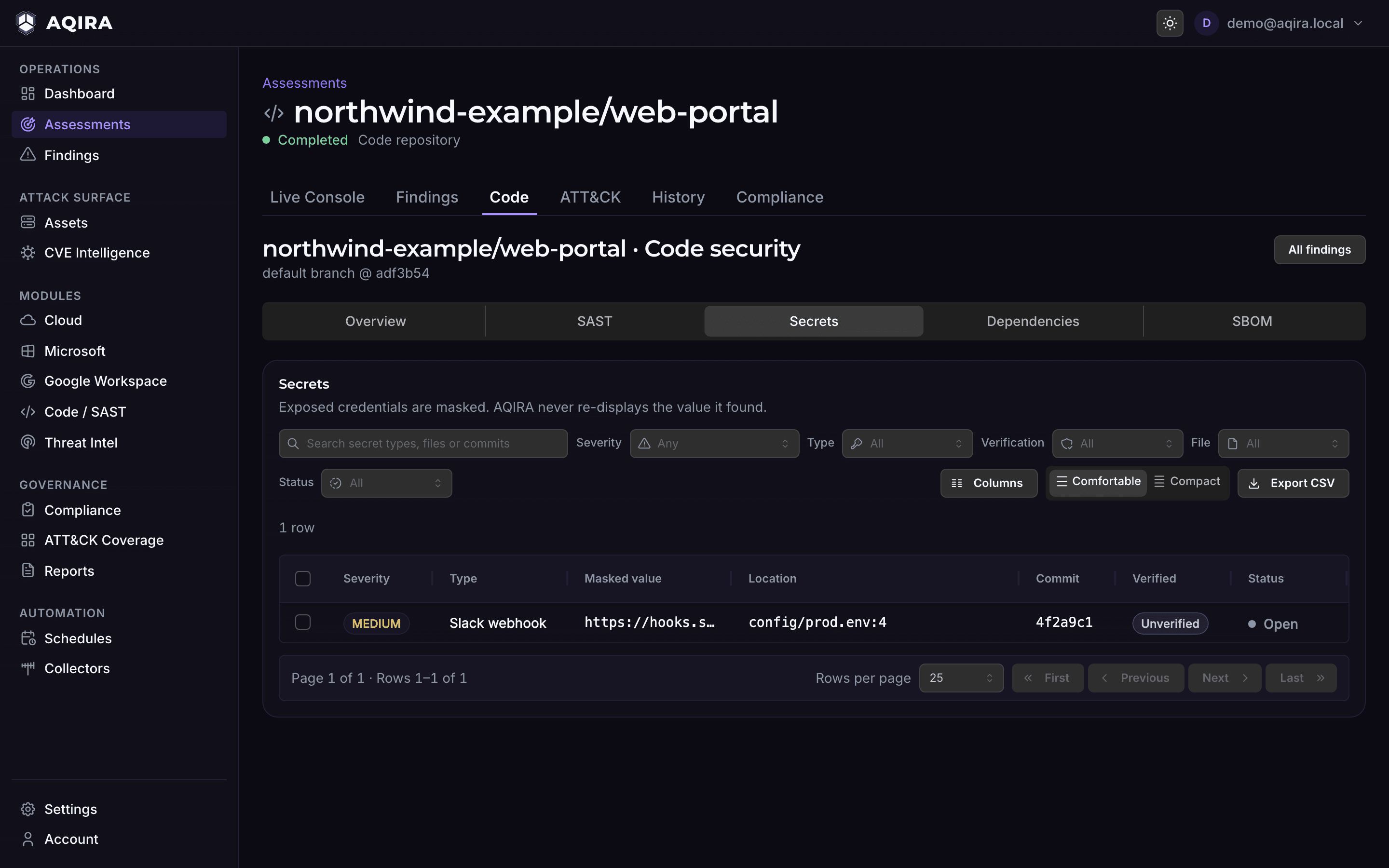
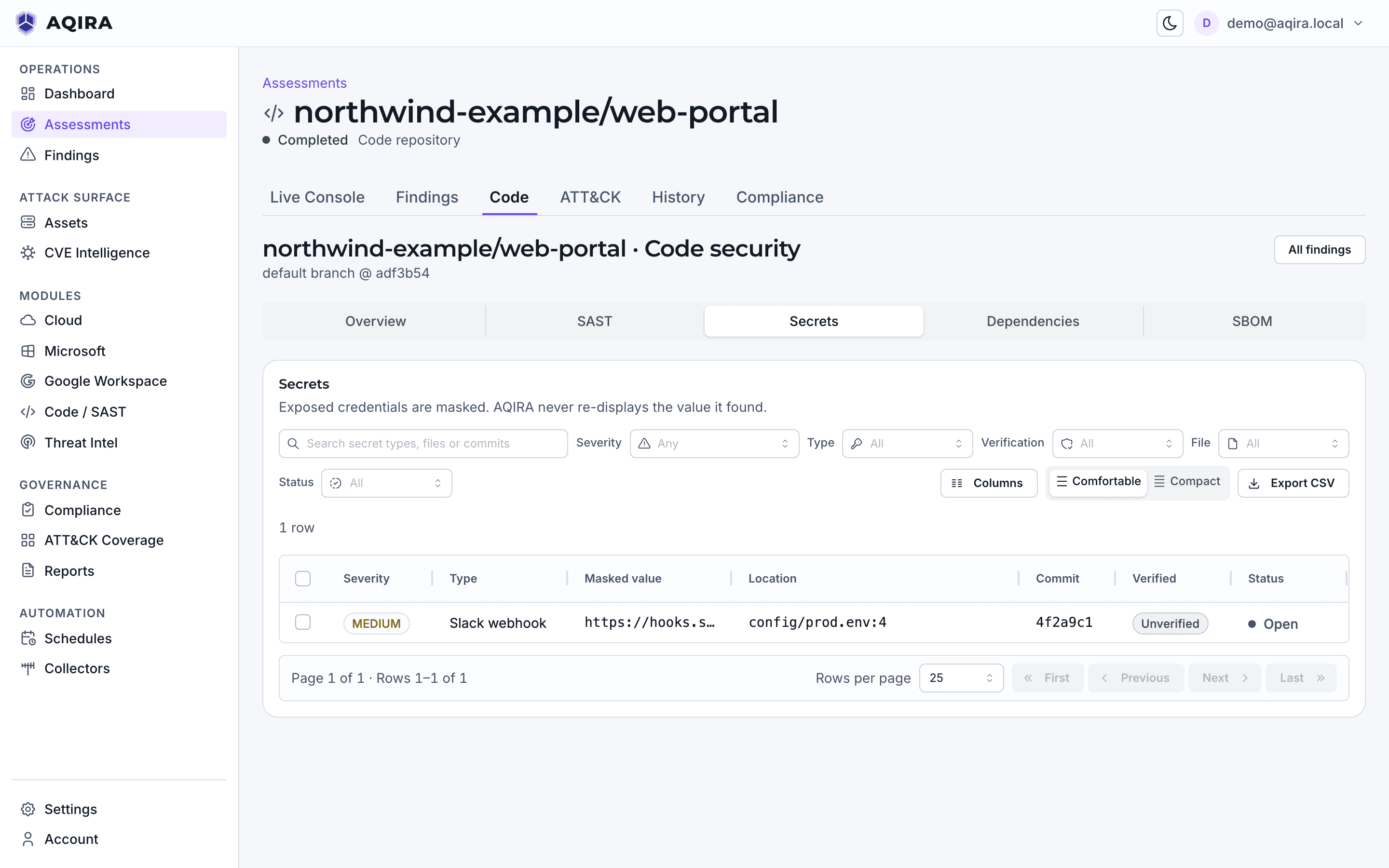
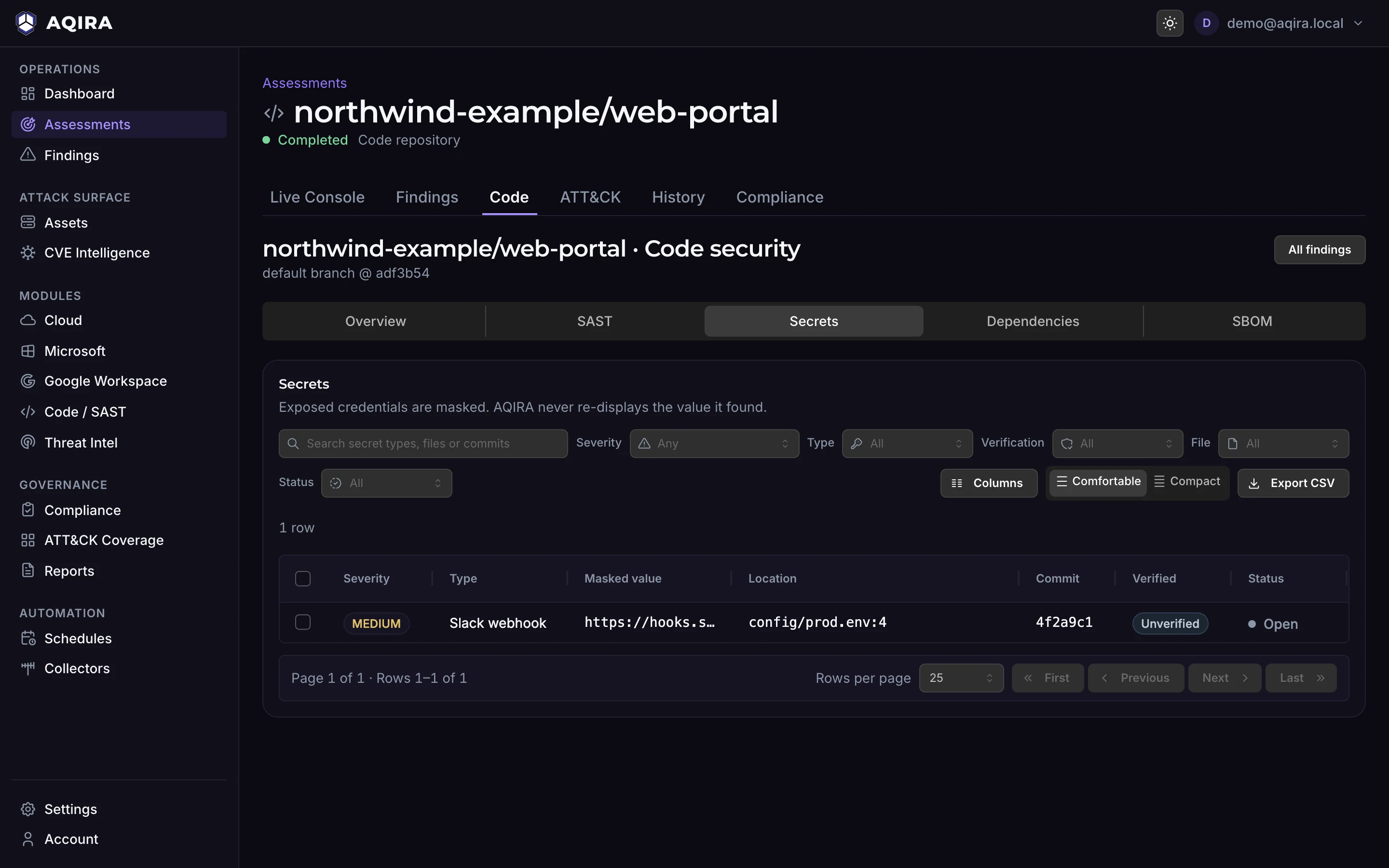
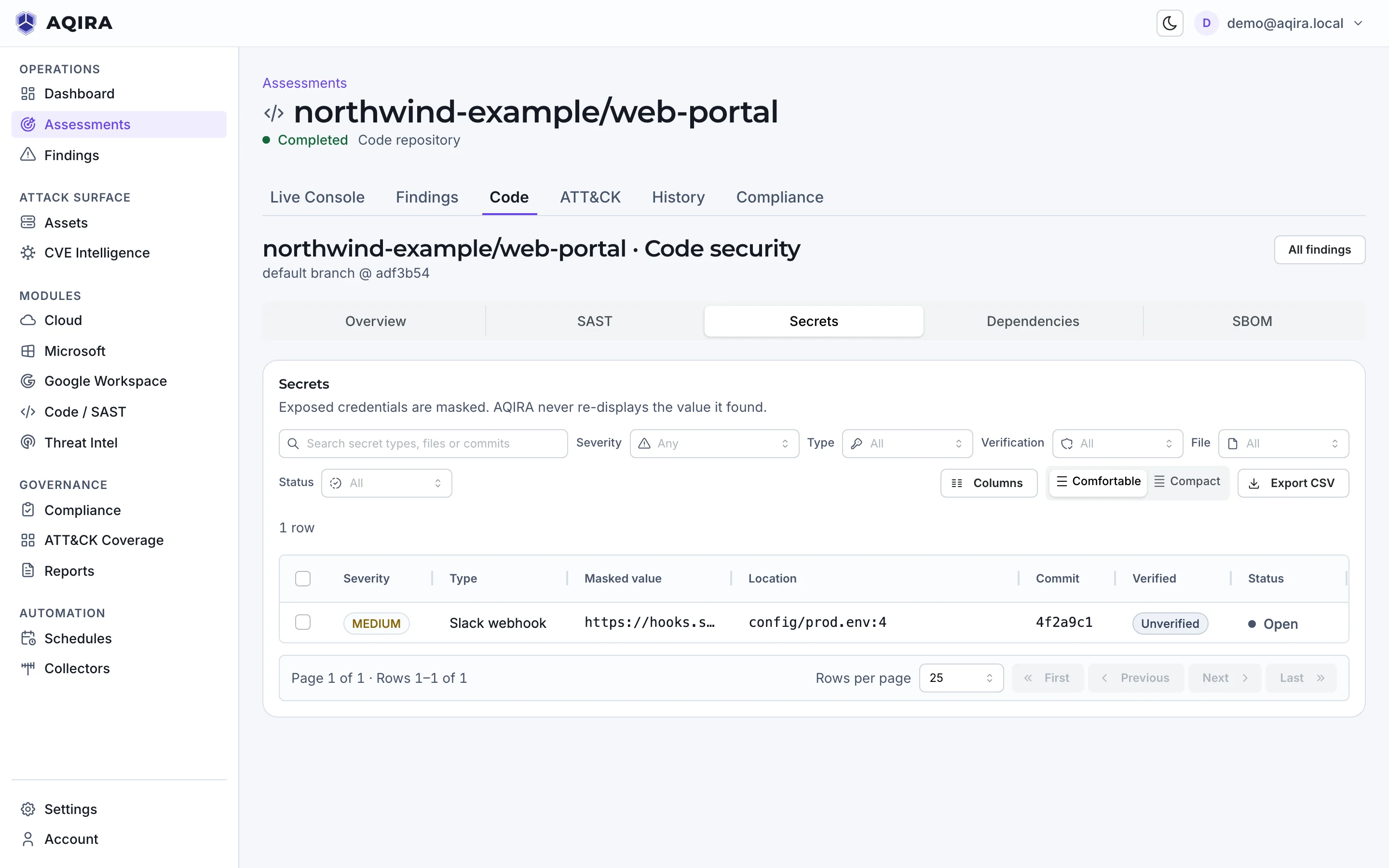
Traces taint through the code and hunts committed secrets.
- Source-code review
- Taint analysis
- Secret detection
03ATLASDependencies, SBOM and IaC
Builds the SBOM and reviews dependencies and infrastructure code.
- Dependency risk
- SBOM generation
- IaC review
04NOVASecret verification and supply chain posture
Verifies secrets and supply chain posture to benign proof.
- Secret verification
- Supply chain posture
- Vulnerability correlation
05POLARISReview and scoring
Consolidates what the others found. Groups the findings by CWE and maps them like every other input's.
06SCRIBEReport
Writes the client-deliverable report from the same evidence the console shows.
The findings it raises
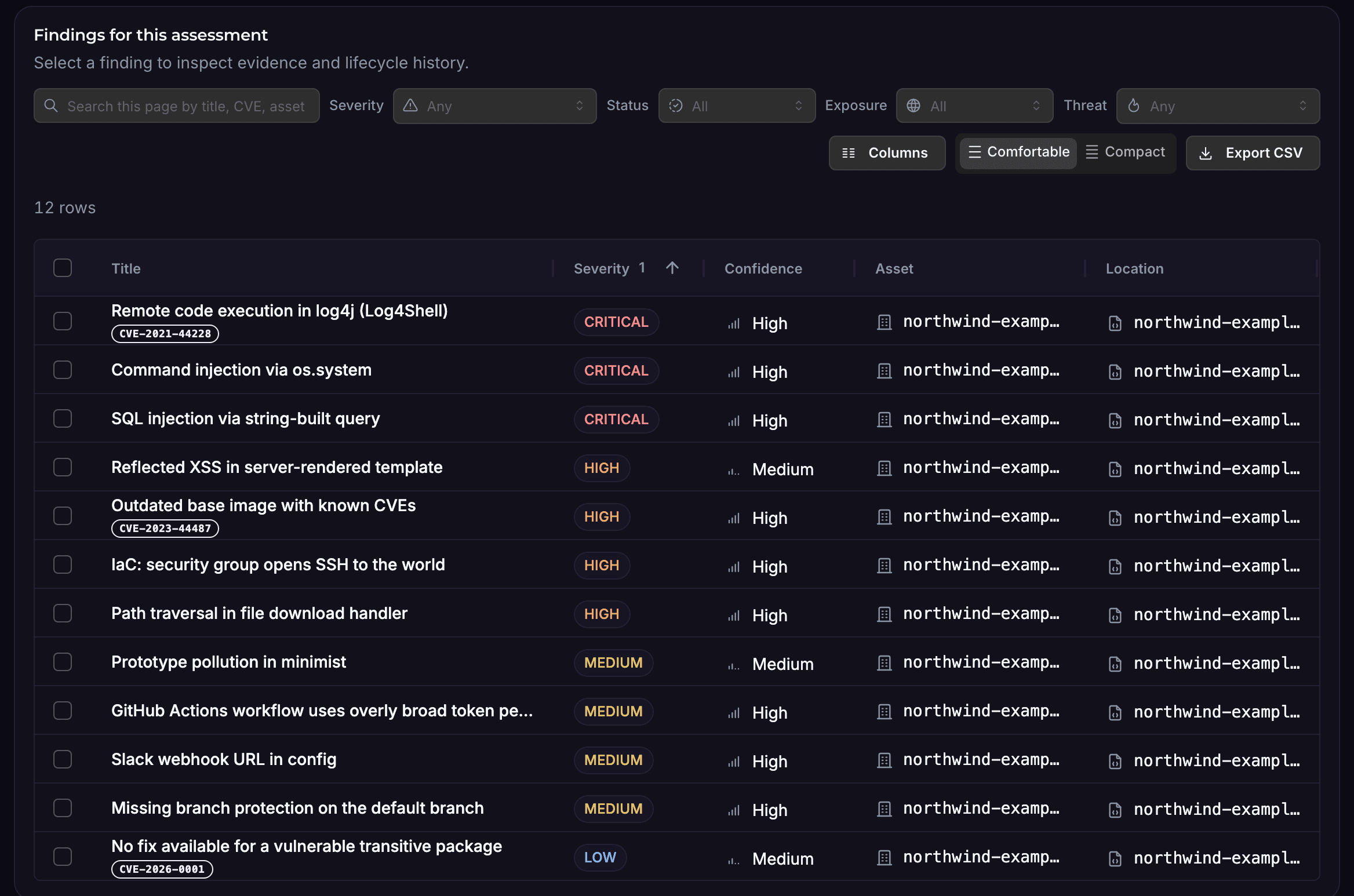
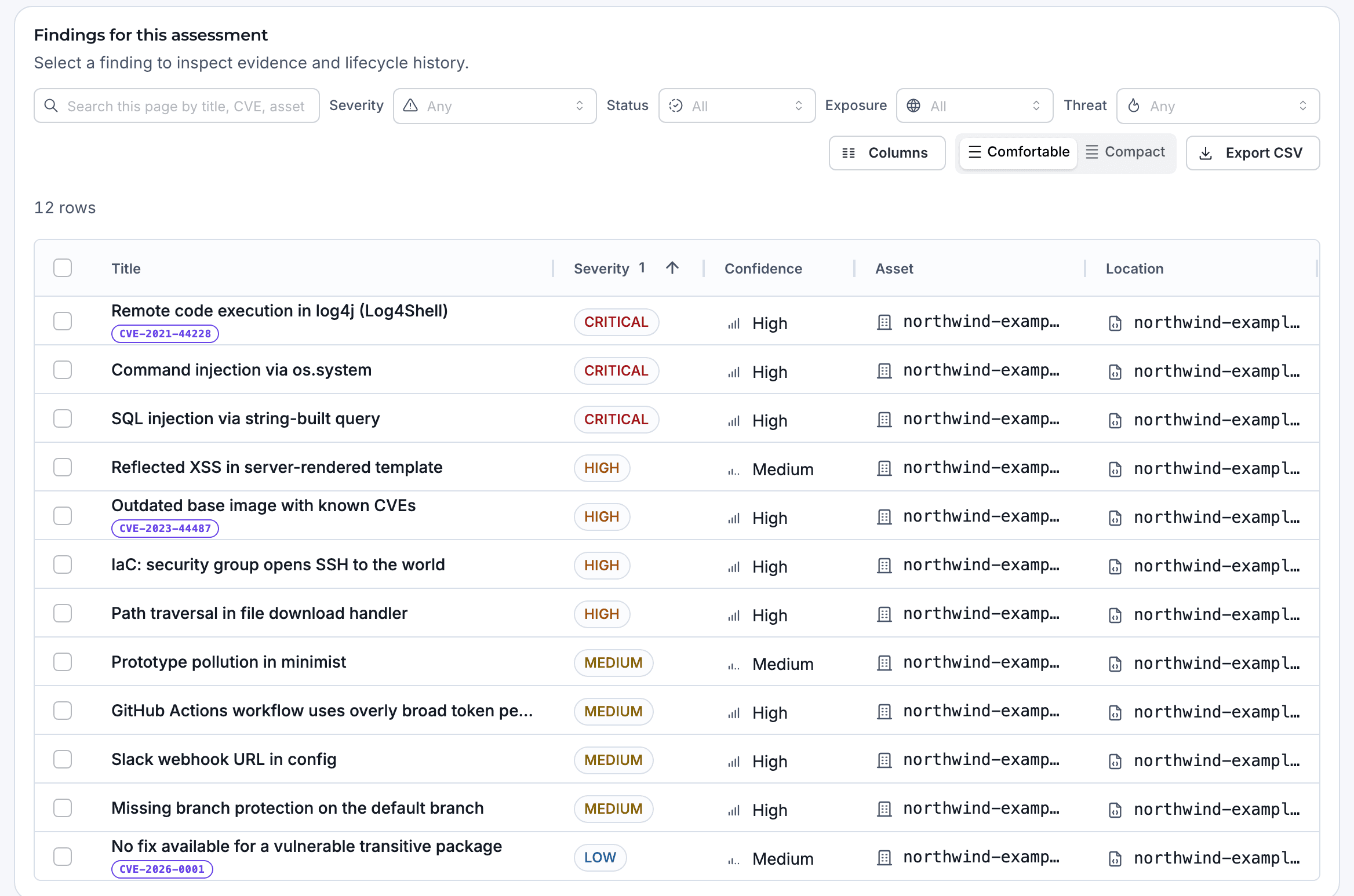
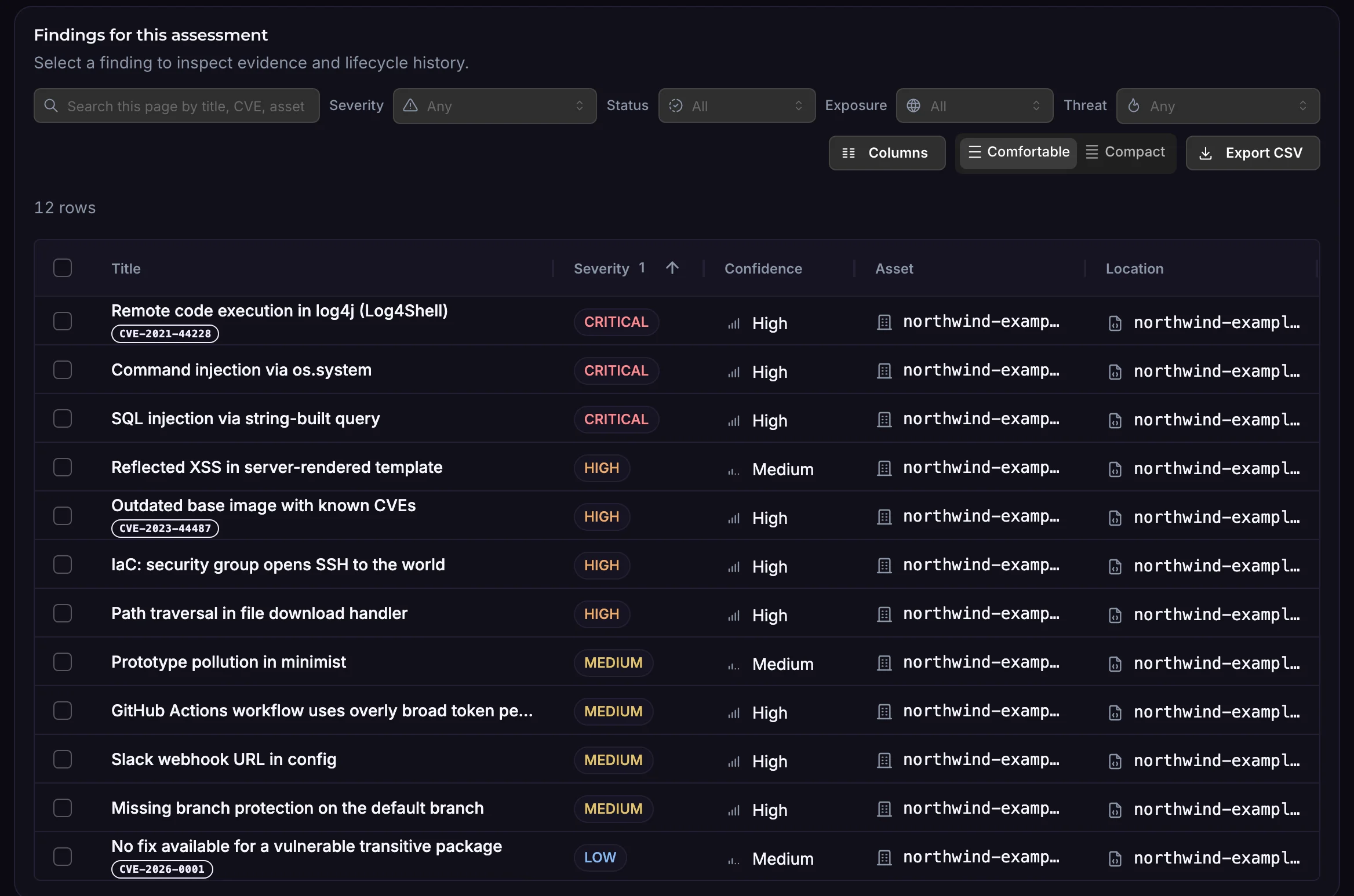
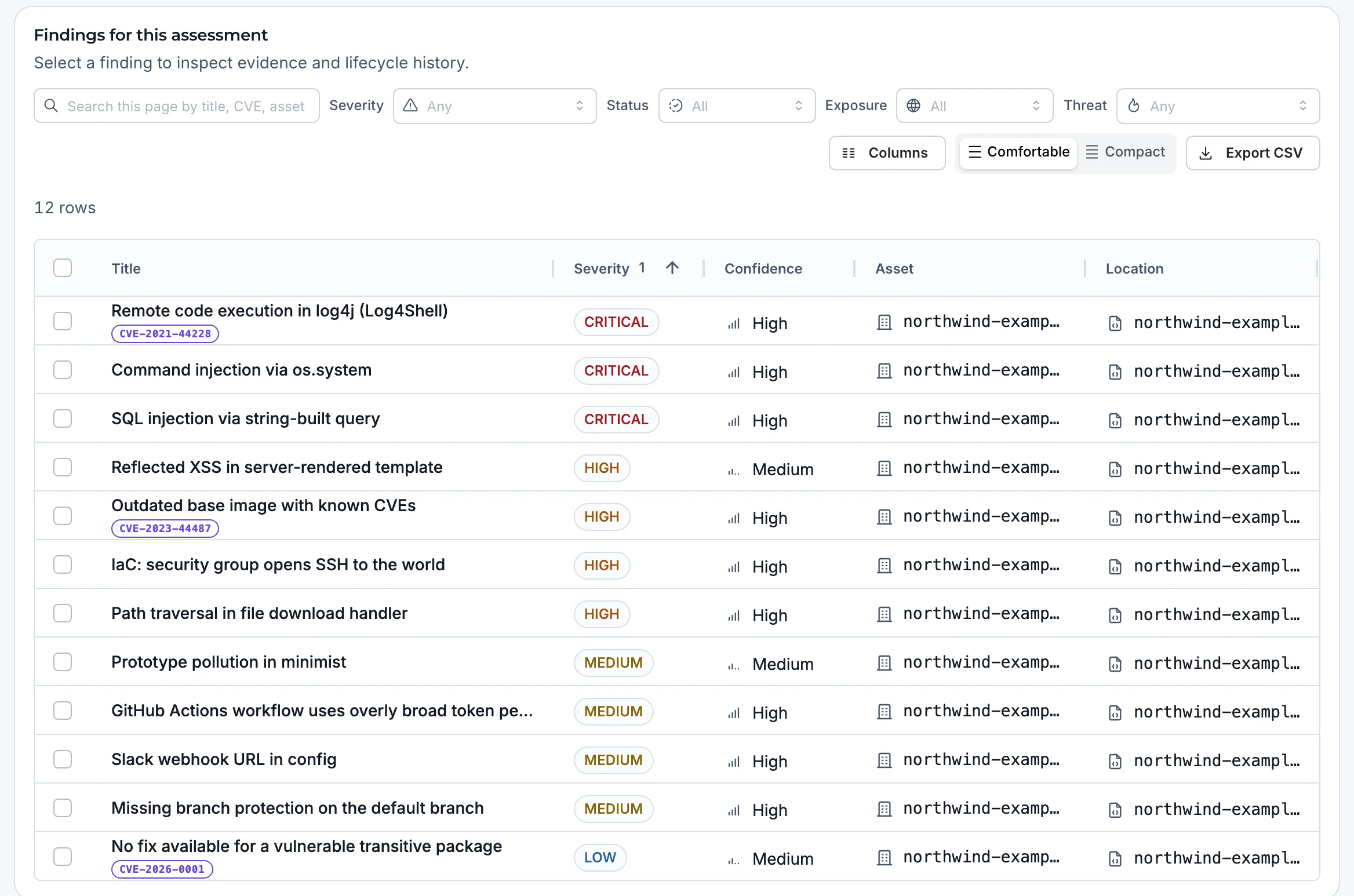
Examples of what AQIRA reports on a code repository, each with evidence, steps to reproduce, remediation in priority order and its ATT&CK technique.
- SQL injection through a string-built query
- Command injection through a shell call
- Path traversal in a file download handler
- Cloud access key or private key committed to source
- Vulnerable dependency, such as Log4Shell in log4j
- Infrastructure code that opens SSH to the world
- No branch protection on the default branch
- CI workflow with overly broad token permissions
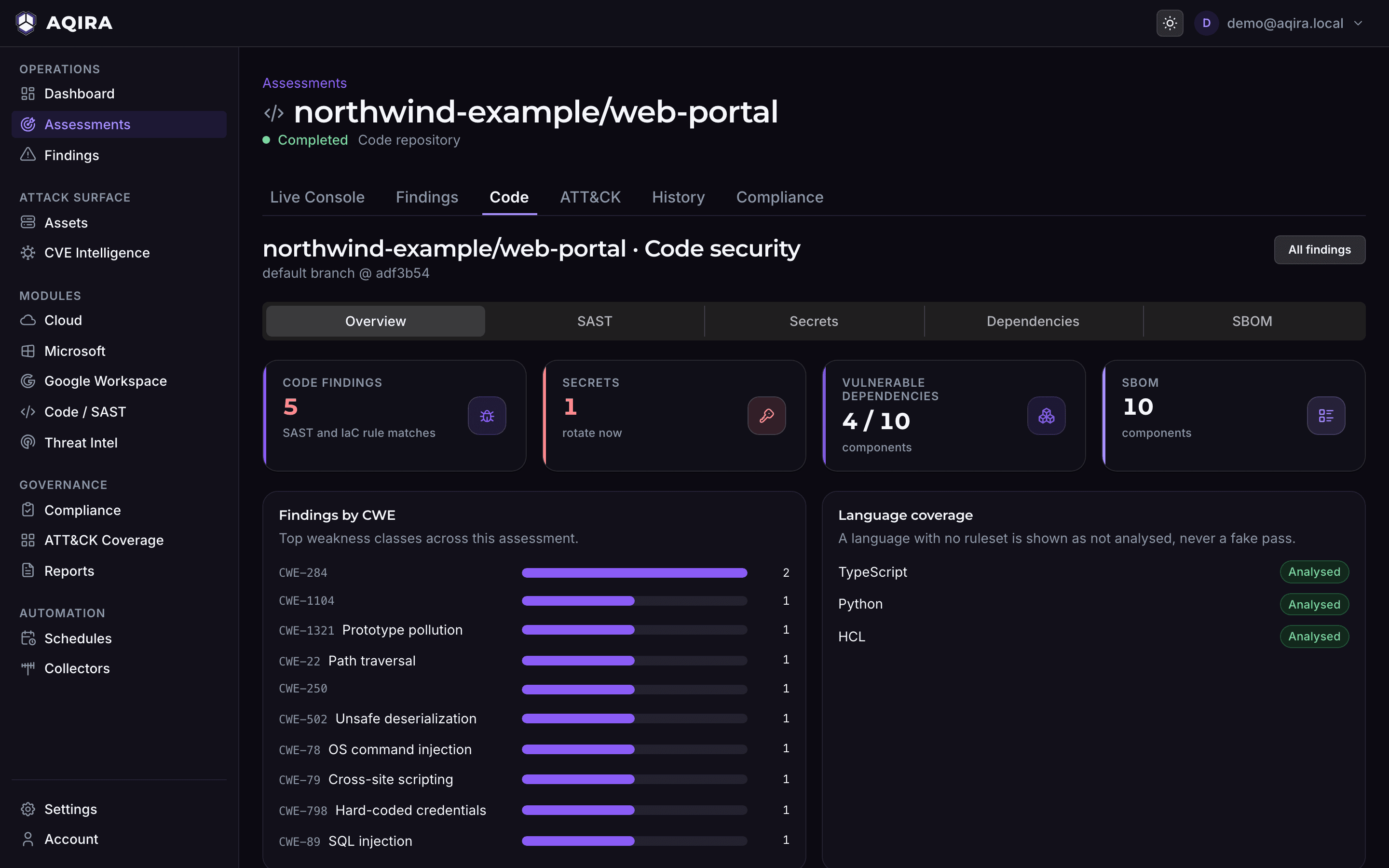
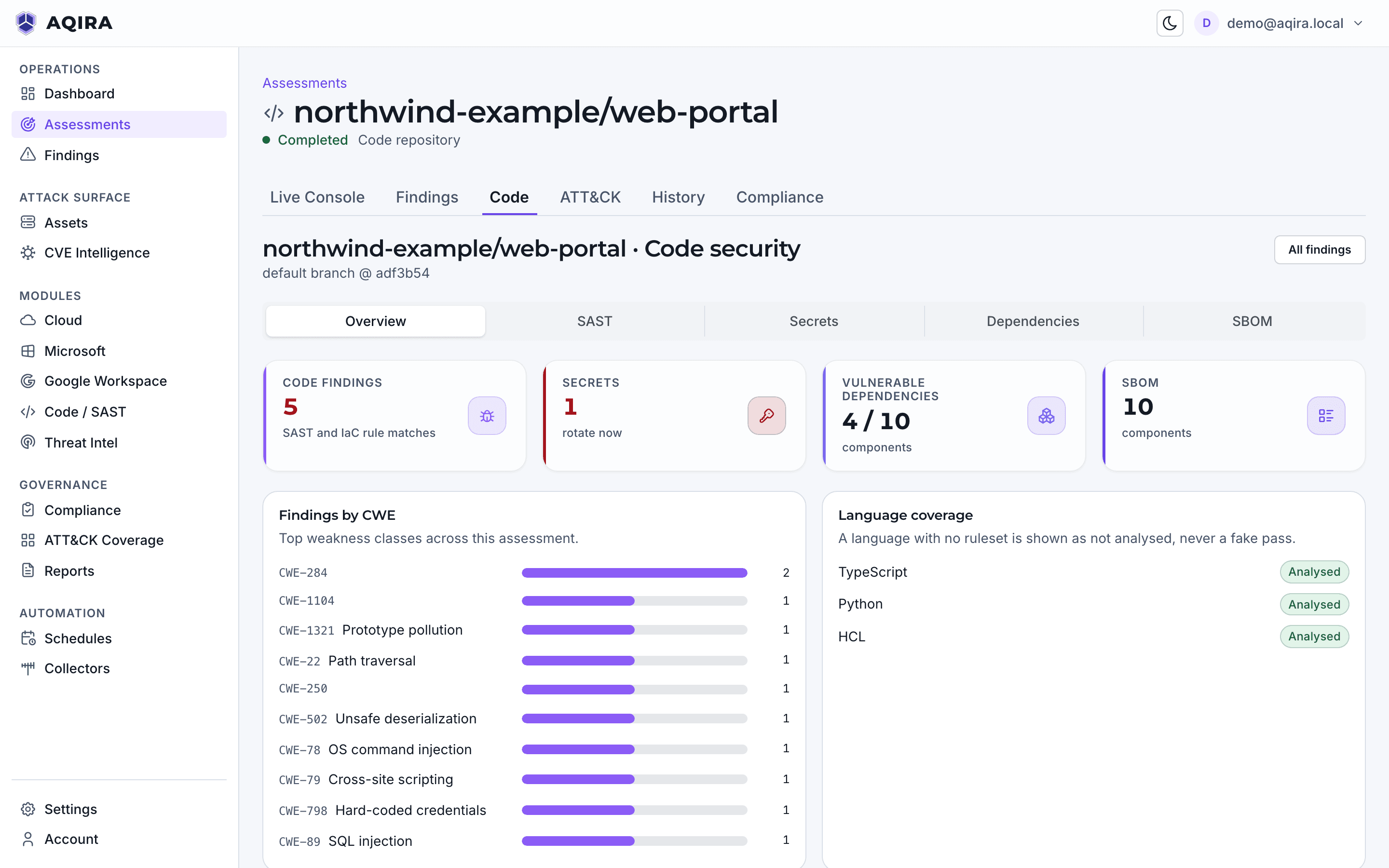
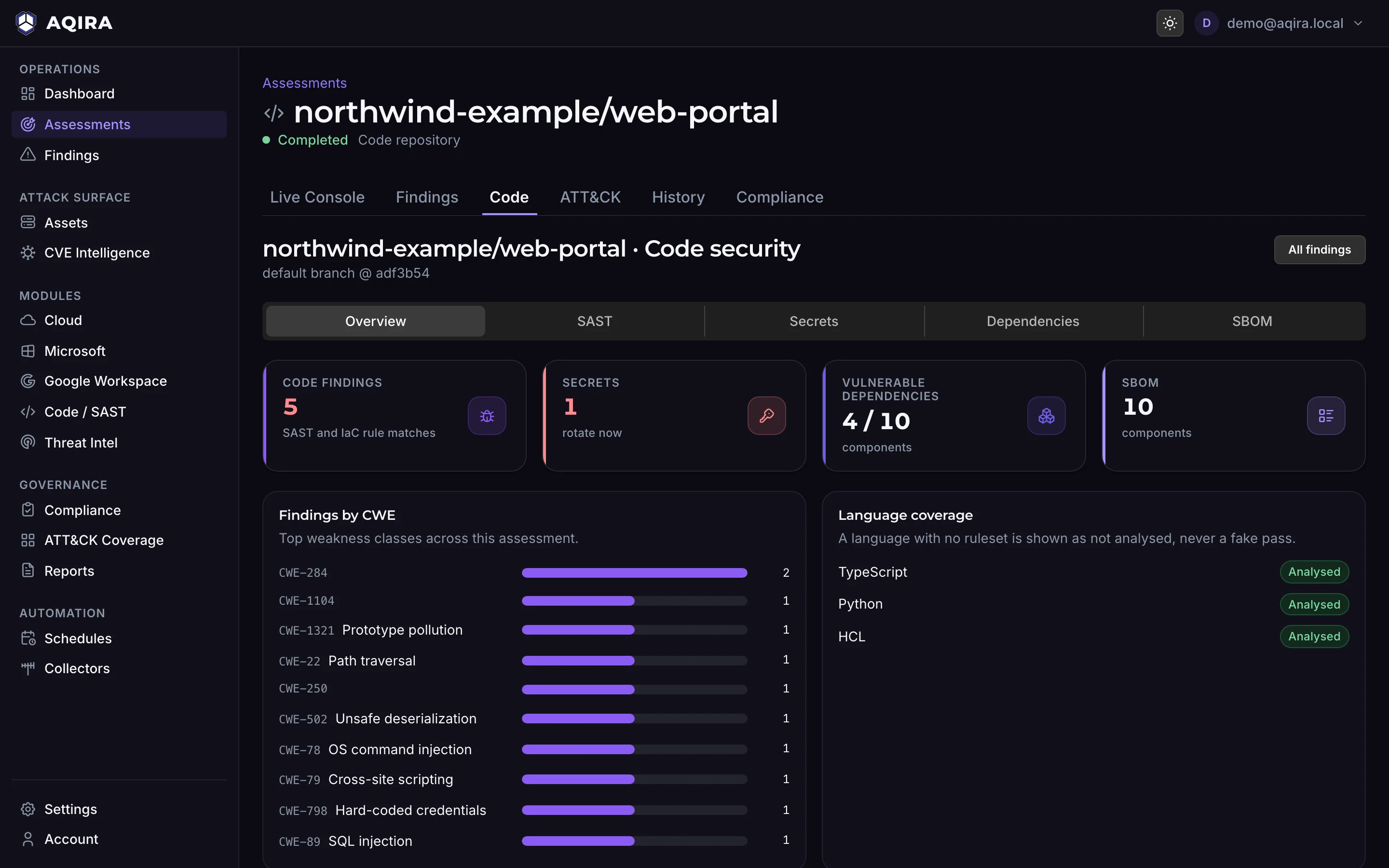
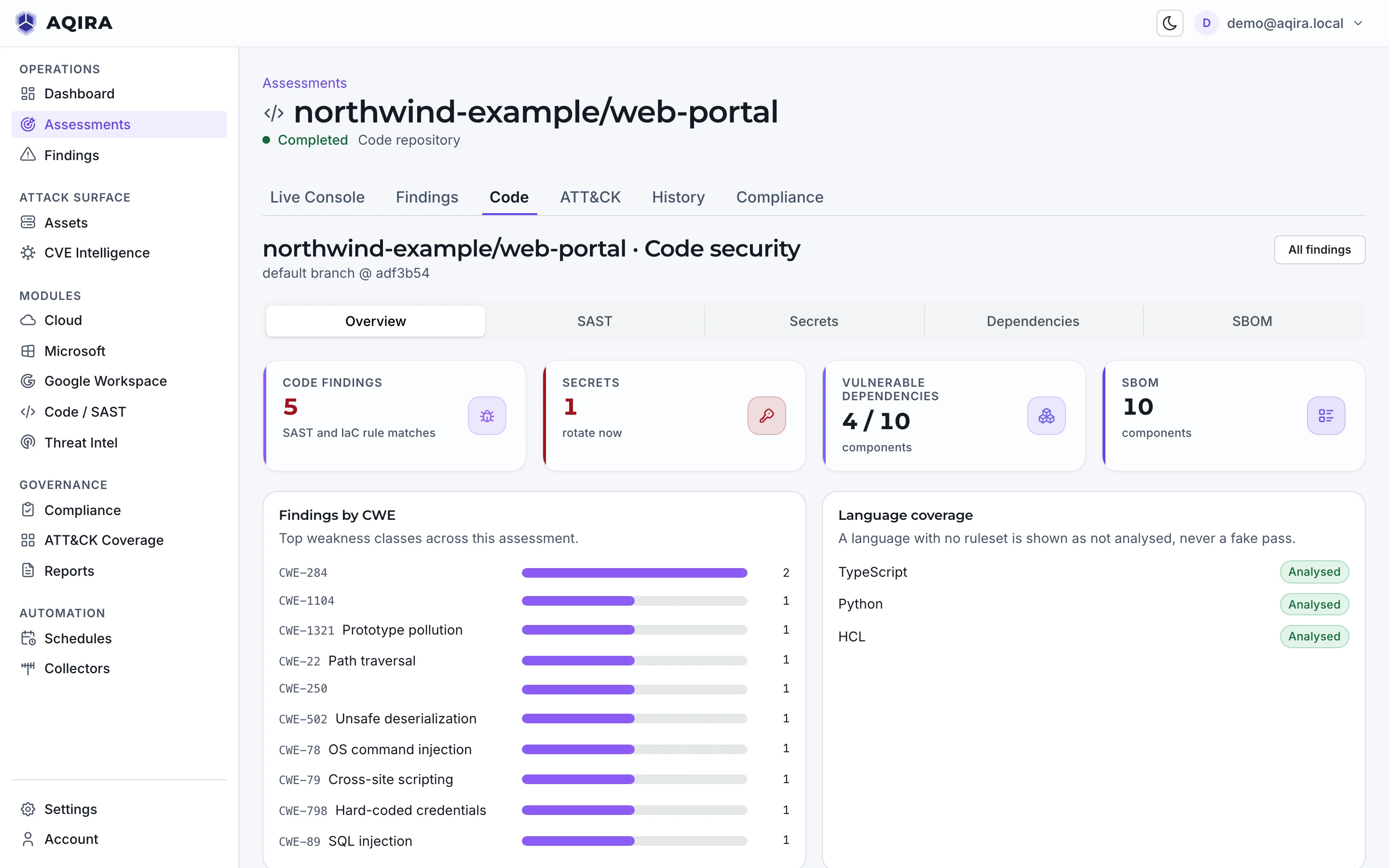
Examples only. What an assessment finds depends on your target; the capture shows a demo assessment.
What it maps, and where results land
A repository assessment opens on its Code tab: findings by CWE, secrets, vulnerable dependencies, the SBOM and the languages analysed. A language with no ruleset is shown as not analysed, never as a pass.
- Repository, files and refs
- The repository, its branches and pull requests, the files that matter, infrastructure-as-code resources and CI workflows.
- SDKs and dependencies
- Every dependency, direct and transitive, collected into a software bill of materials.
Mapped to what your auditors read
POLARIS maps every finding to the controls it touches, in every framework that applies.
Grouped by weakness
- CWE
Every finding is also mapped to
ATT&CK, OWASP, NIST CSF, NIST SP 800-53, NIST SP 800-171 and COBIT.
Control status, owner and evidence are in compliance mapping; what reaches the client is in the reports.
Where this assessment stops
A clean result covers only what AQIRA tests on a code repository.
A read-only token
A token scoped to read the repository is enough. It is stored encrypted and never shown again.
Secrets stay masked
A secret found in the code is shown masked, with its file and commit. AQIRA never shows its value.
Code, not the deployed system
A flaw in the repository shows what the code does, not whether a running system is reachable; that needs a domain assessment.
Limits common to every input, and how proof stays benign, are in the methodology.
The other five inputs
Next step
A demo assessment of a code repository
A demo runs one assessment in the console, with demo data: the agents at work, the evidence behind each finding, and the report.